


Members-only perks


07/06/2023 • 4 min
How to get started charging your electric car at home
If you’re looking to install electric car charging at home, we’ve got all the info on what equipment you need plus costs and other considerations.
Owning an electric car has many benefits – and one of those is the convenience to charge your vehicle from the comfort of home. It may sound too good to be true, but with an EV home charger, you can do exactly that.
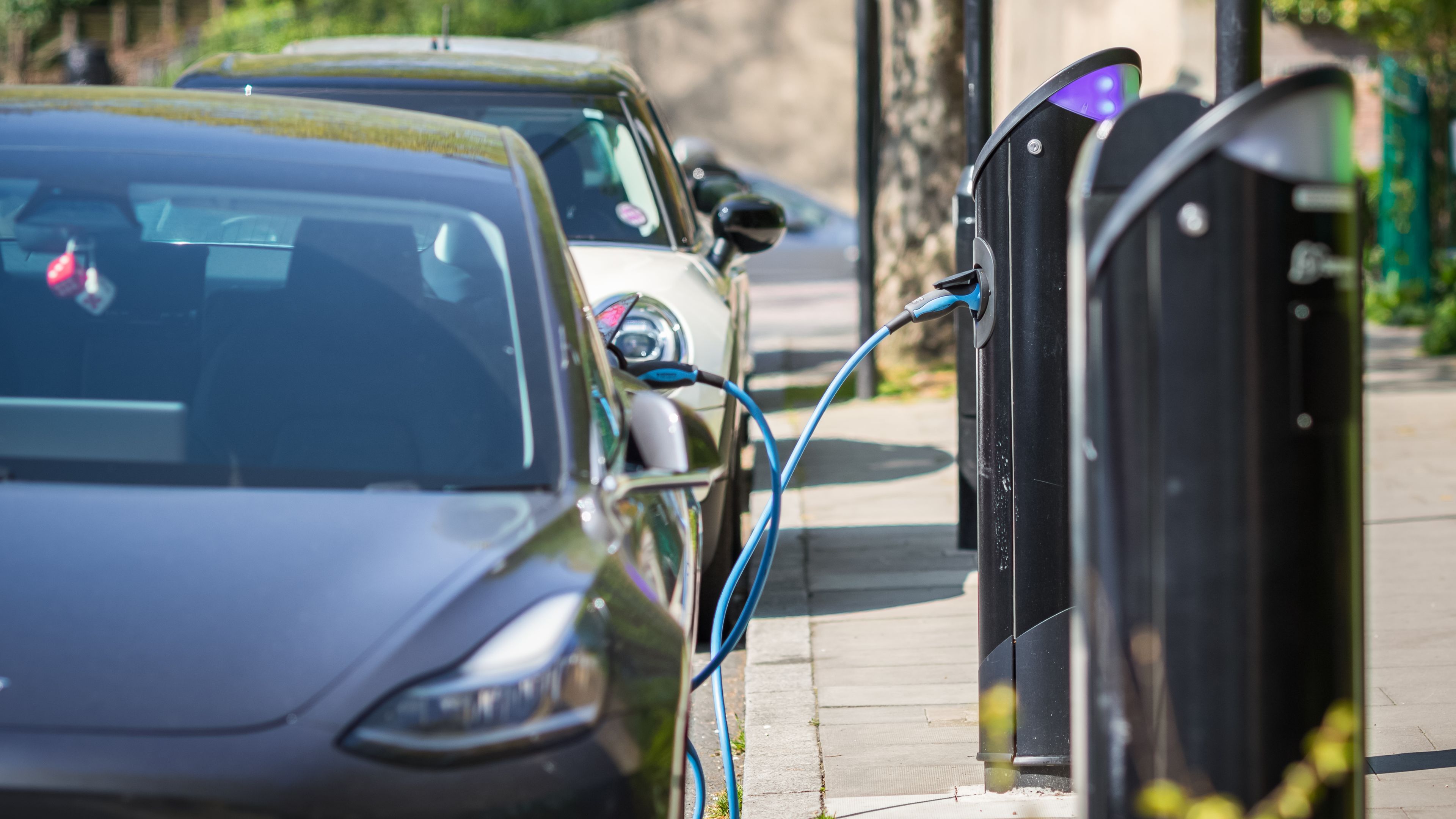
For first-time EV drivers, understanding how and where you can charge your vehicle can be confusing. You’ll discover there isn’t a shortage of locations from which you can give your battery the juice it needs, with parking lots, special charging stations and transport hubs among your options. However, EV home charging stations are great as they put you in direct control of your vehicle’s fuel level.
Charging electric cars at home will save you time, money and hassle. They empower you to recharge your vehicle in ways gas-powered cars can’t.
In this article, we’ll cover what a home charging station is, different types of stations and how to charge your EV vehicle. Read on to learn more.
How to charge an electric car at home
Before we go into more detail on the how-to, you will need to purchase certain things to get started. This list includes, but is not limited to:
- Space in which to charge the car, like a garage or driveway. You will need space to park the car and for the charger.
- Electric car charger for home
- Charging cables. These come in different variations and depend on the car’s make and mode.
To charge your car at home, you simply need to plug it in using the cables provided with the car and leave it for a set amount of time, which will differ from car to car, and depend on the charge you have left in the battery. You will know which cables to use by checking your owner’s manuals. Always be sure to read the manuals that come with your car and your charging station to ensure safe use.
What is an electric car home charging station?
An electric car home charging station is simply a weatherproof unit that you need to mount on a wall, and a charging cable or a socket for plugging in a portable charging cable is connected to this. These units are generally made of elastomers, polyurethanes and thermoplastic polyurethanes, and look like a wall-mounted electrical appliance. Most people will choose to have a home charging station installed at home because it offers fast charging without leaving home. Although it is possible to install an EV charger at home yourself, it is always best to consult with a professional to ensure it is installed correctly and safely. More on cost later.
Different types of EV home charging stations
There are different levels when it comes to EV home chargers. The reason for this is that different types of EV accept different amounts of power. There are also different types of connectors, but the different levels also determine how long it takes each EV to charge. Different EVs can accept different levels of power from the charger.
- Level 1
Level one charges at 120-volts and three to five miles per hour. Every EV on the market can be charged at this level as it uses a regular wall outlet. It’s the slowest way to charge an EV but it works well for plug-in hybrid electric vehicles (PHEVs). This option is unsuitable for drivers travelling long distances on a daily basis. On average they cost
- Level 2
Level 2 charges at speeds of 12 to 80 miles per hour using 208-240 volts. This is the most commonly used level for everyday EV charging and is the one most people install at home. It’s also the level you’ll commonly see installed at shopping centers, grocery stores and gas stations. Level 2 cars can charge up to 80 miles per hour, depending on the level of power the charger has and the maximum charge rate of the vehicle. Level 2 offers charging at 10 times faster than Level 1 and can usually be completely charged overnight. To save on costs, most EV owners choose a 40-amp charger over a 100-amp charger. A Level 1 charger is cheaper than a Level 2, which on average costs around $500.
- Level 3
This is DC Fast Charging and Supercharging at 400-Volt to 900-Volt. This is the highest level of charging and therefore the fastest. It charges at 3-20 miles per minute. This level uses a direct current (DC) which is why it is faster. The current is higher to facilitate this – which is why Level 3 chargers aren’t generally installed at home. Cost is also an issue, as these chargers can be quite expensive. The cost to install this EV charger at home could be more than the vehicle itself.
How much does it cost to install an EV charger at home?
An electric car charging station can cost anywhere between $250-$1000. It depends on the power needed and the features. If you are getting someone to install it for you, you’re looking at around $200-$1000. But it could go into the thousands if you are having an extra circuit installed. Before paying to get it installed, we recommend consulting with a qualified electrician.
How to install an EV charger at home
There are many regulations in place which must be followed when you are installing electrical outlets at home. Some states and cities require a permit to install an EV charger at home, so make sure you check with your local building authority. For this reason, we recommend enlisting a professional who is licensed to carry out the work to ensure the charger is both efficient and safe to run. You can find electricians who are licensed from the International Association of Electric Inspectors (IAEI) or the National Fire Protection Association (NFP).
Get charging
Learn more about electric vehicles and your EC charging options in our blog.
Want to test out an EV first? Visit Hertz to rent an electric =car today.
Related Articles
Do I Need to Return an EV Rental With a Full Charge?
Hertz offers three great options options to recharge your rental EV. Read about them below.

Are electric cars better for the environment?
As people across the world consider the environmental impact of everyday life, many are exploring ways to reduce their carbon footprint with Electric Vehicles (EVs).
Five Ground-Breaking EVs: What is the Best Electric Car Ever?
Electric cars are becoming more and more innovative, affordable and reliable. As a result they’re now so popular that even some their biggest skeptics are beginning to take notice.
