


Members-only perks


04/28/2023 • 7 min
Five Ground-Breaking EVs: What is the Best Electric Car Ever?
Electric cars are becoming more and more innovative, affordable and reliable. As a result they’re now so popular that even some their biggest skeptics are beginning to take notice.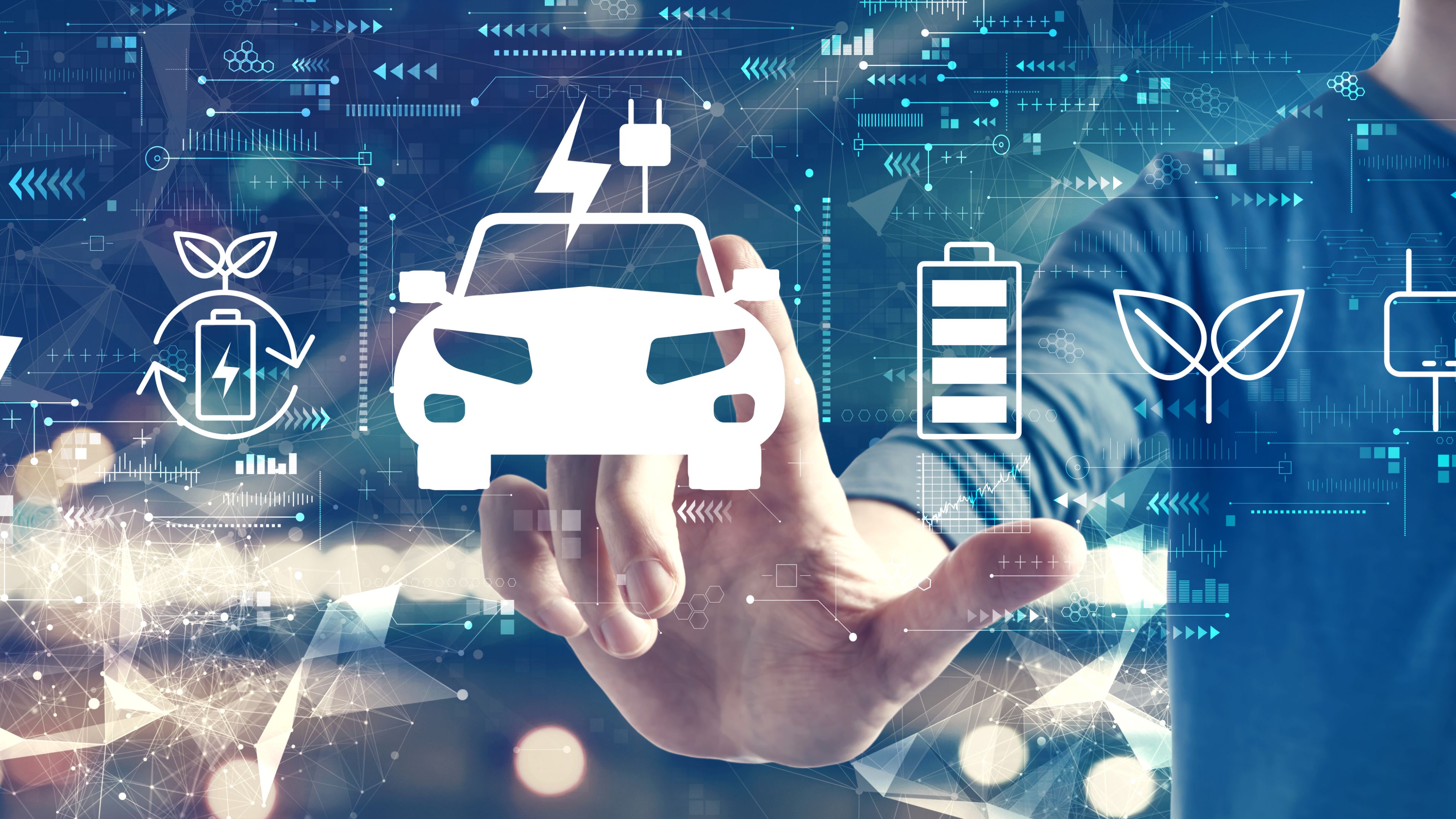
So how did we get to this point? When did electric vehicles finally swerve away from niche motoring, and into the twin lanes of consumer-friendly accessibility and top-notch sporting performance?
In this roundup, we’ll talk you through five cars that changed the game – and brought electric vehicles into the mainstream.
Buckle up for some of the best electric cars ever.
What is the best electric car?
First, a note. Some of the electric vehicles listed below were chosen for their outstanding performance, others for their simple, workaday reliability. Either way, they’re all icons in their own right. So, let’s meet the EVs that helped change mobility forever.
Tesla Roadster (First Generation)
Let’s start at the beginning. Back in 2008, Tesla Motors released the Roadster – the EV that ran before others could walk.
The Roadster could handle an unprecedented 245 miles on a single charge, and had a performance and efficiency generally comparable to a gas equivalent. Think 0-60 mph in less than four seconds, and a top speed of 125 mph. It ran from a lithium-ion battery – the same kind you’d find in a laptop. The Roadster also has the distinction the first ever production car to be launched into space – a now infamous experiment from Tesla CEO Elon Musk.
All in all, the Roadster was a big deal – but it came with a sizeable price tag too. At the time of release, it would set customers back $109,000 – making the Roadster far from a crossover hit. Nevertheless, the Tesla Roadster set the bar high, and early, for what EVs could be capable of.
Nissan Leaf
Next up, the humble Nissan Leaf. Unlike the Tesla Roadster, you won’t find the Leaf on fancy commercials and dramatic press shots set in the desert. Its acceleration is hardly groundbreaking. And it certainly hasn’t been blasted into space. So why is it on this list?
The answer is simple – the Leaf so straightforward, user-friendly, and accessible, that you might forget it’s electric. Essentially, it’s your everyday commuter car, without the emissions. It slipped directly into normal life like nothing had changed, when in fact an awful lot had.
Nissan was the first established car company to produce a mass-market EV, and you could quickly find it in showrooms alongside their gas lineup. This greatly expanded EV car ownership and made the Leaf an icon – in fact, it was the best-selling electric vehicle until 2020, when it was finally overtaken by the Tesla Model 3, which is nothing to be ashamed of.
The best bit? It drives great. If you’re in a Leaf, expect 151 miles from a single charge, plus handy extra features like driver assist and e-Pedals. It might not be the best electric car on the market, but it’s possibly the best electric car for the money. Starting at $27,800, it’s a great choice for those taking their first steps toward electric vehicles. Some of the biggest leaps forward in automotive history have often been the most usable and utilitarian – think Ford Model T – and you could argue that the Nissan Leaf has its own place in that lineage.
Porsche Taycan
Porsche’s first ever full-electric car in mainstream production was one for the history books. It’s a car that pushed EV technology forward and established Porsche as leaders in a new market for the first time of asking.
Gratifyingly speedy and flashy, but big and comfy enough for a family, the Taycan balances panache with practicality. It’s a well-built, functional and efficient car – handling and driving a like Porsche while embracing electricity.
For many automotive manufacturers, taking a departure from what you know and do best is a daunting prospect, but Porsche managed to assertively combine past, present and future in the Taycan.
Tesla Model 3
After releasing the Roadster in 2008 and the Model S in 2012, Tesla’s spate of awards, innovations and records continued for the next 10 years. Fastest ever electric car? Check. Best-selling electric car (in Norway)? Check. Breaking the world record for speed, and then beating it again the same day? Double check.
But away from the testing labs and racecourses, they also won another distinction – the best-selling electric vehicle ever. The Model 3 was the moment when Tesla went truly mainstream, with a relatively affordable electric vehicle that boasts the speed and battery range people expect from a Tesla.
After setting the benchmark for accessible performance, Tesla went on to show what was possible in terms of sales and distribution, and making EVs something that everyone would consider – in some ways, more impressive than any speed or mileage record.
Honda e
With a design more Fiat 500 than Tesla Roadster, the Honda e pitches to a new audience of unshowy, urbanite EV drivers. Indeed, it looks as though it would be more at home in 1960s Rome than early 2020s California.
But despite its throwback aesthetics, the Honda e is as tech heavy as they come. Think numerous crash-avoidance features and an app to pre-condition your car ready for driving as it charges. It doesn’t even have wing mirrors, opting instead for a fully camera-based rear-view set-up.
What we’re getting at, is that the Honda e marks a new breed of electric vehicles for the mass market – technologically advanced and aesthetically daring, when at one point in the past car brands might have only dared go for one of the two. This was a bold move from Honda, and on their very first attempt.
How to choose an electric car
There are several factors you might want to take into consideration when considering an electric car:
Size
EVs come in all sorts of forms, from small compact hatchbacks and sports cars to larger SUVs and giant pick-ups, so there’s something for everyone – whether you’re whizzing round the city or hauling heavy loads. You’ll need to make sure the electric vehicle you settle on is well suited to your needs and is the most practical option.
Battery capacity
If you’re driving intercity or across states, you might benefit from an EV that offers more miles per charge. The Tesla Model S is well-known for its stamina, offering over 400 miles per stop. Similarly, the Ford Mustang Mach-E, Kia EV6 and BMW i7 will both offer well over 300 miles before needing to be plugged in for a recharge.
Seating
If you’re traveling in a group or have a family, you’ll want to have enough seating for everybody. There are many EV crossovers and SUVs that seat 5, and even 7 in the case of the Mercedes-EQ EQS, Volvo EX90 and Tesla Model X.
Storage
A lengthy trip or lots of passengers can often mean a trunk full of bags and suitcases. Thankfully, there are a number of electric vehicles that offer ample storage space. The BMW iX boasts more than 35 cu ft, or for more modest requirements the Volkswagen iD.4 can carry 30 cu ft of luggage.
That wraps up our list of what might be five of the most ground-breaking electric vehicles. If that’s whetted your appetite to give an EV a spin for the first time, why not rent an EV with Hertz today.
Related Articles
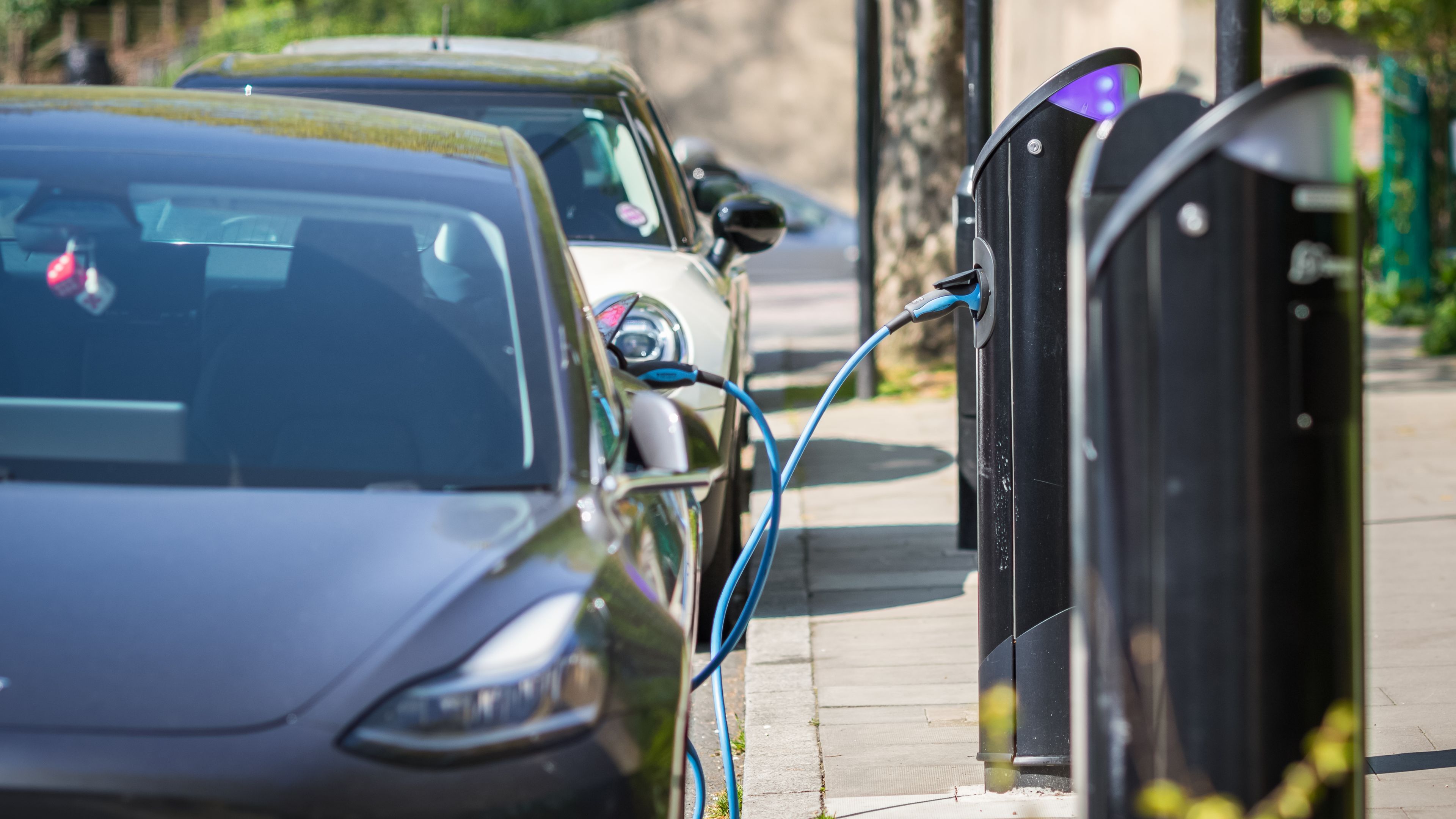
Do I Need to Return an EV Rental With a Full Charge?
Hertz offers three great options options to recharge your rental EV. Read about them below.

Are electric cars better for the environment?
As people across the world consider the environmental impact of everyday life, many are exploring ways to reduce their carbon footprint with Electric Vehicles (EVs).
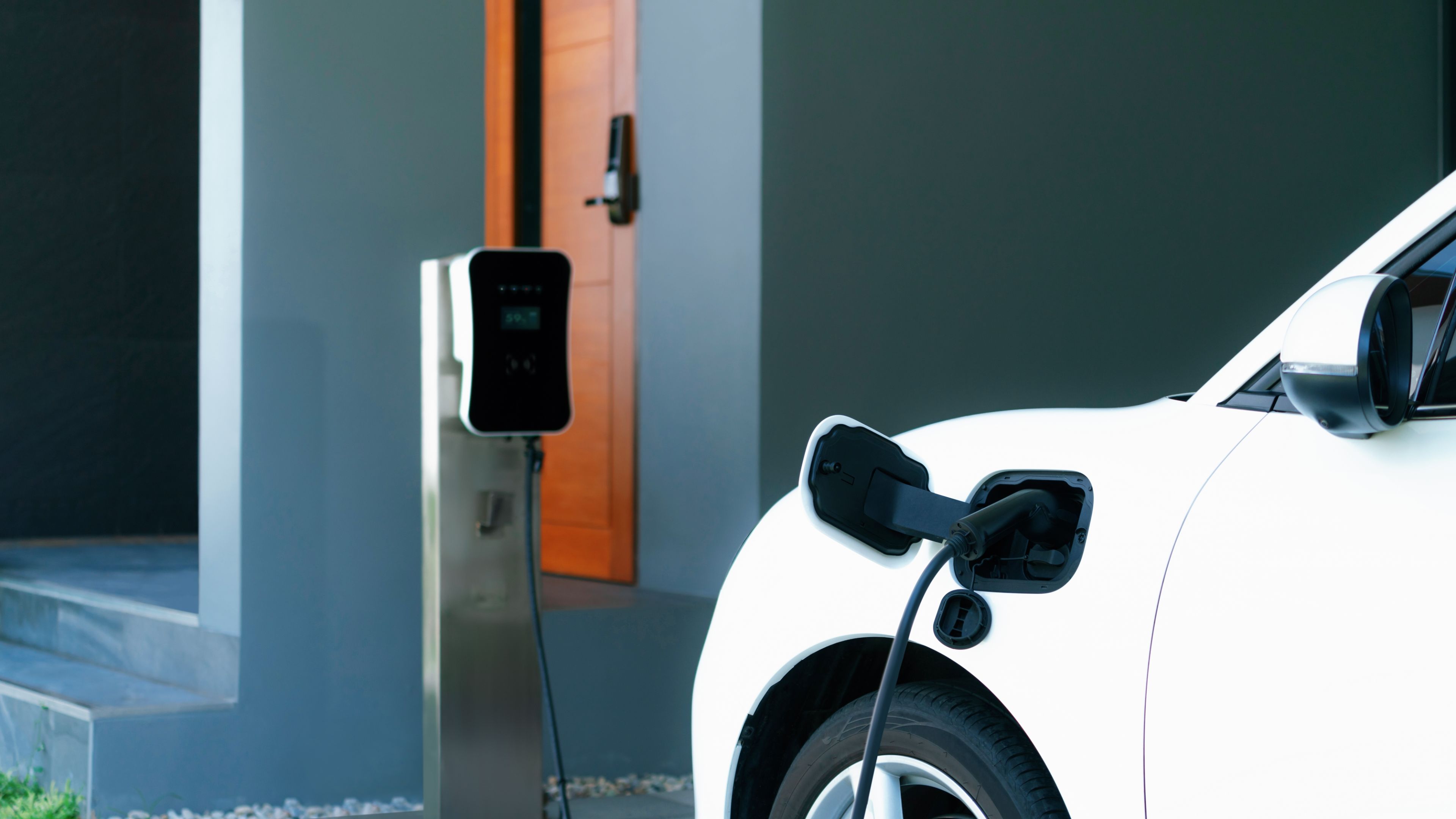
How Do You Charge an EV at Home?
Read our in-depth guide for the answer and much more EV charging information. Learn more with Hertz.
