


Members-only perks


02/27/2023 • 3 min
How Do You Charge an EV at Home?
Read our in-depth guide for the answer and much more EV charging information. Learn more with Hertz.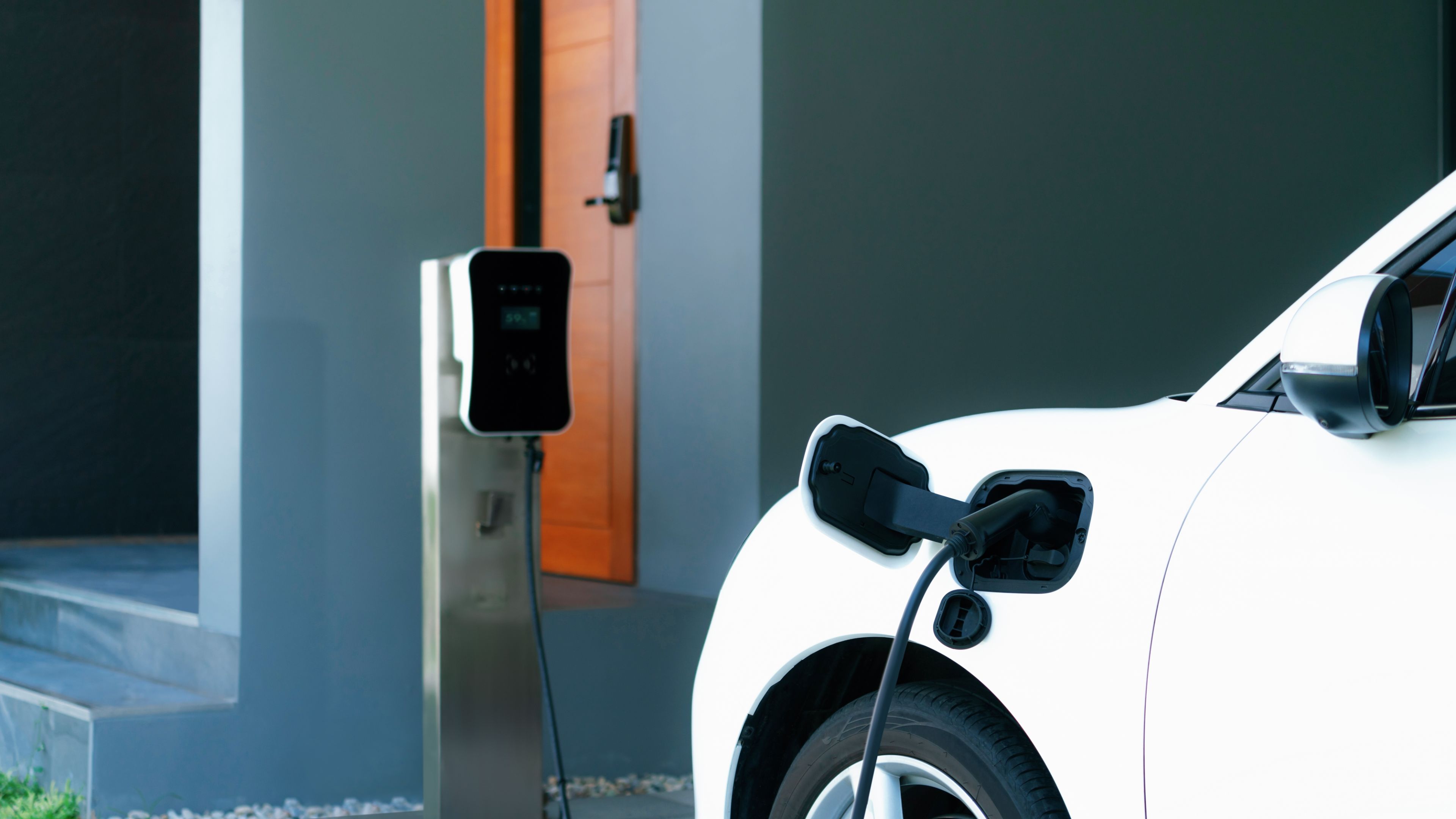
How Do You Charge an EV at Home?
With EV ownership on the rise, many Americans are wondering, how do you charge an electric car? It’s more straightforward than you might think. You may have already seen charging stations outside your local library, in public parking lots and at the last hotel you visited. But, for 80% of EV owners, charging an EV at home is ideal.
Our guide will reveal how people charge their EVs, including charging away from home, charging times and how much it costs to charge your EV.
With low prices and a steady supply, residential electricity rates often make charging an EV at home the most reliable option. Unless you live near a public charging spot, or often park by one, charging your EV can be inconvenient without a home charging outlet.
The vast majority of EVs use lithium-ion batteries. There are typically three ways of charging them:
- Level 1: Uses your home’s standard 110-volt outlet
- Level 2: Uses an upgraded 240-volt outlet
- DC fast-charging: Uses direct-current electricity
It’s worth noting that DC charging requires specialist equipment that can be both expensive and complex, which means most people are unable to install it at home.
Level 1 charging can work well for hybrids and cars with smaller batteries, but it can be inefficient for larger vehicles. For some models, charging your electric car at home with Level 1 can take days. And we don’t expect you to have time for that.
Level 2, however, is a bit faster – and it can add a range of roughly 25 miles per hour of charge. To charge at a Level 2 capacity at home, you’ll need to install a specialist outlet. If you already have an appliance that uses 240 volts (like an air conditioner), you may be able to use that outlet. Alternatively, you can install an outdoor charger that’s connected to a 240-volt source. This usually costs around $500.

How Do You Charge an Electric Car on the Road?
You can charge an electric car at public charging stations when you’re out on the road. Some are free and others require payment. The best way to learn about your nearest charging station is by checking online.
There are several sites dedicated to painting an accurate picture of available charging stations. Some are organized by government bodies, whereas others are community focused.
What Should I Do if I Run Out of Battery While Driving?
An EV with an empty battery behaves just like a gas-powered car with an empty tank. If your EV runs out of charge, you’ll come to a stop. But don’t worry, there’s little chance an empty battery will take you by surprise. Almost all cars have warning systems for when your battery is running low and will advise you on how to top it up.
However, if the unlikely happens and you find your EV battery has run flat, you’ll have to call roadside rescue. From there, you’ll be towed to the nearest charging station where you can recharge your battery.
The best way to avoid this is to keep an eye on your car’s battery and plan your route in advance, making sure to charge your vehicle where necessary.
How Do You Charge an Electric Car at an Apartment?
Charging your EV overnight can be a challenge if you can’t park your car outside your home. If you live in an apartment, here are a handful of solutions that may work for you:
- Use supercharging stations nearby to charge your EV in around an hour.
- If possible, charge at your place of work, or at charging stations near your workplace.
- Run a heavy-duty cable from your apartment to your EV, if permission is granted.
- Consider asking your landlord to install a charging station.
There’s no shortage of fixes for a low EV battery. Find your nearest charging station, plug in and feel the joy of cruising around on the electric version of a full tank.
Related Articles
Do I Need to Return an EV Rental With a Full Charge?
Hertz offers three great options options to recharge your rental EV. Read about them below.

Are electric cars better for the environment?
As people across the world consider the environmental impact of everyday life, many are exploring ways to reduce their carbon footprint with Electric Vehicles (EVs).
Five Ground-Breaking EVs: What is the Best Electric Car Ever?
Electric cars are becoming more and more innovative, affordable and reliable. As a result they’re now so popular that even some their biggest skeptics are beginning to take notice.
