


Members-only perks


05/25/2023 • 5 min
Can you charge an electric car with solar panels?
Can you charge an EV with solar technology? Explore our guide as we dive into the potential of electric cars with solar panels and the future of solar EVs.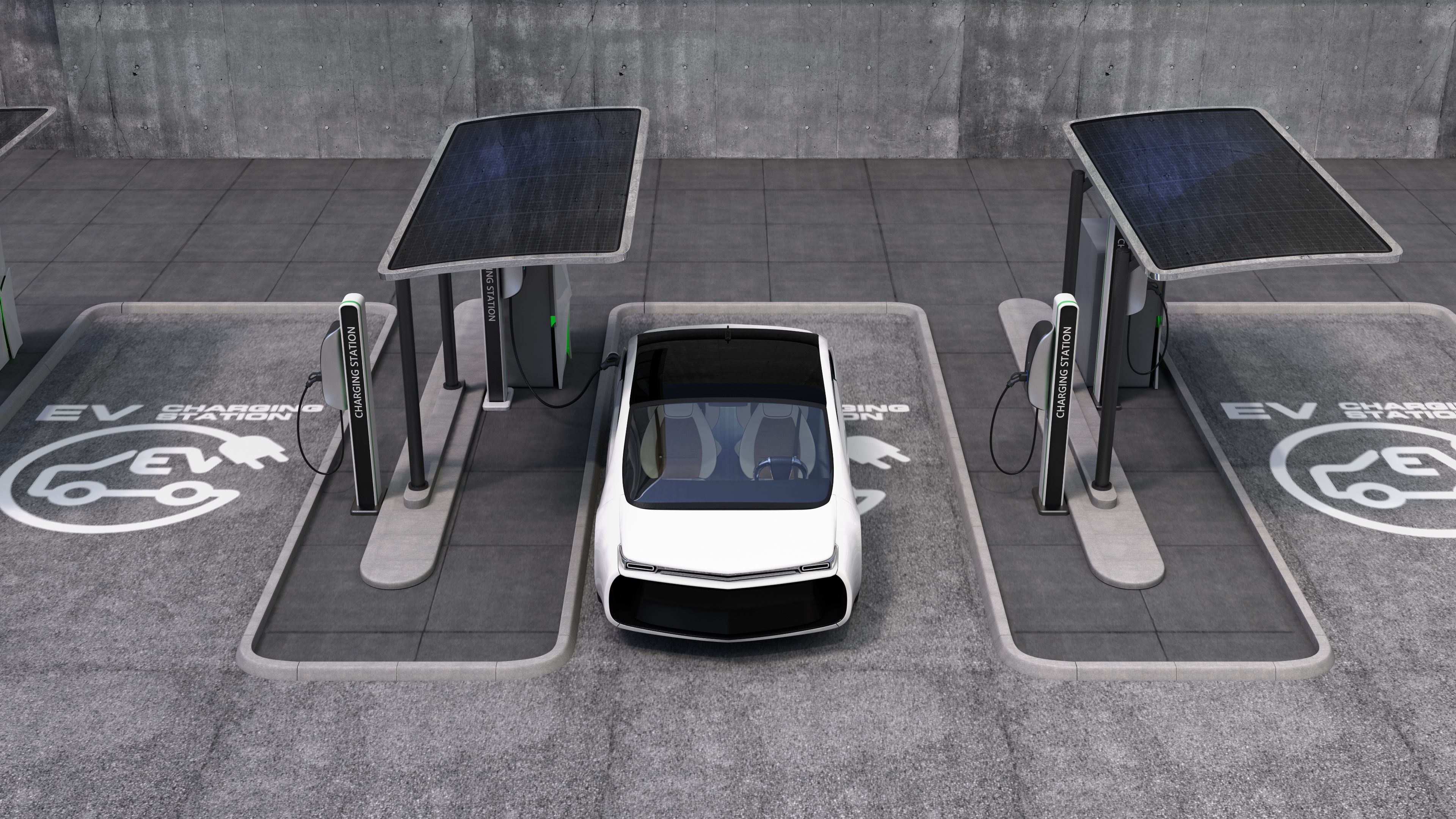
In a world where semi-autonomous and fuel-free cars are regularly hitting the road and becoming a part of everyday life, you’d think the next frontier would be self-charging solar cars. And in some ways, you’d be right. The electric vehicle (EV) industry has been tinkering with solar-powered features for several years now, but is it possible to charge electric cars with solar panels alone?
Read on as we explore the potential of solar-powered electric cars, what it would take to charge one and how much it would cost.
In this article:
- Can you charge an electric car with solar panels in 2023?
- Why don’t electric cars have solar panels?
- How many solar panels would it take to charge an electric car?
- Electric cars with solar panels
Can you charge an electric car with solar panels in 2023?
The answer is currently yes and no. We’re on the cusp of seeing mass-produced electric cars powered by solar panels, but for your average EV, it’s simply not practical. However, as renewable energy continues to see rapid growth – and solar power becomes more affordable and accessible than ever – it is possible to charge your electric car with solar panels from your home supply.
We’ve also seen several cars incorporate solar-powered components into their design. For instance, the hybrid Toyota Prius has used solar energy to enhance its efficiency for years.
A solar-powered electric car is an attractive concept. The idea that you could drive to work, the beach or the mall and gain extra range on your electric car while it sits in the sun is highly appealing.
At best, it could help resolve any concerns about range anxiety, letting you top up your EV with a natural boost to get you from A to B. It also has financial potential by conveniently charging your vehicle for free. In summer months, or in places that get plenty of sunshine, the extra solar power could save EV drivers money on visiting charging stations, or their home electricity over time.
Why don’t electric cars have solar panels?
While some electric cars use solar energy to enhance the driving experience, for regular EVs, it’s currently not enough to power the engine.
Most solar panels require plenty of surface area to capture sunlight and generate electricity. The average surface area of a car limits how many solar panels you can fit on the roof and produce energy.
How many solar panels would it take to charge an electric car?
The number of solar panels you would need to charge an electric car can vary depending on various factors, including:
- How much electricity your EV uses annually
- Solar panel wattage
- Solar panel efficiency
- Local weather conditions
Let’s consider this as if you’re charging an electric car with solar panels on your home supply. On average, most EVs require approximately 4,000 kWh of electricity to run each year. Meanwhile, most solar panels can generate between 250 and 400 watts of electricity. Depending on how much sun you get where you live, you might need seven to nine solar panels to charge your EV exclusively from solar energy at home.
Now, the average length of a car is around 15 feet, so finding a way to squeeze more than seven solar panels on the roof would be impossible. As for price, solar panel installation can range anywhere from $3,500, at the lowest cost, or an average of $16,000.
Electric cars with solar panels
Currently, there are EVs available that utilize solar energy to improve their features and ensure the starter motor has plenty of charge. Although a hybrid vehicle, older generations of the Toyota Prius offer solar-powered air conditioning. In optimal weather, it promises to keep the car cool while parked. Toyota’s latest venture, the Prius Prime, aims to modernize the solar panel roof for 2023.
However, the prospects of solar-powered EVs may soon change, thanks to advancing technology. Electric cars with innovative solar features plan to hit the market over the next few years.
Sono Motors Sion
The Sono Sion offers a unique exterior design consisting entirely of solar cells where you would normally expect paint. This functional five-seater EV promises to add an average of 112 km, or up to a potential 245 km per week of extra driving range from solar power alone.
At only $25,000, the Sono Sion aims to be one of the most affordable eco-friendly electric cars once it begins production in the US.
Lightyear 0
The Lightyear 0 introduces solar technology to the luxury car market. Depending on your climate, EV drivers could enjoy a potential 6,000 to 11,000 km of range up for grabs each year from integrated solar panels.
With a sleek design inside and out, Lightyear claim to be the world’s first long-range production-ready solar EV. As a limited release, the price tag of the Lightyear 0 will be $250,000. However, they plan to market the next generation – the Lightyear 2 – for a more competitive $30,000 by 2025.
Both vehicles offer standard lithium-based EV batteries that you can charge at public charging stations or from your home supply, which is a practical consideration. That way, you can make the most of free solar energy without worrying about catching as many rays as you can before the battery runs out.
If electric cars with solar panels are as promising as they look, they could be a major advantage for short-distance drivers, or as a secondary vehicle for local journeys.
Learn more about electric vehicles on our Hertz blog and explore our range of EV rentals available near you.
Related Articles
Do I Need to Return an EV Rental With a Full Charge?
Hertz offers three great options options to recharge your rental EV. Read about them below.

Are electric cars better for the environment?
As people across the world consider the environmental impact of everyday life, many are exploring ways to reduce their carbon footprint with Electric Vehicles (EVs).

Five Ground-Breaking EVs: What is the Best Electric Car Ever?
Electric cars are becoming more and more innovative, affordable and reliable. As a result they’re now so popular that even some their biggest skeptics are beginning to take notice.
