


Members-only perks


02/03/2023 • 5 min
A History of Electric Vehicle technology
Explore the fascinating history behind electric cars and their development from the 19th century to modern innovations. Learn what EV tech is with Hertz.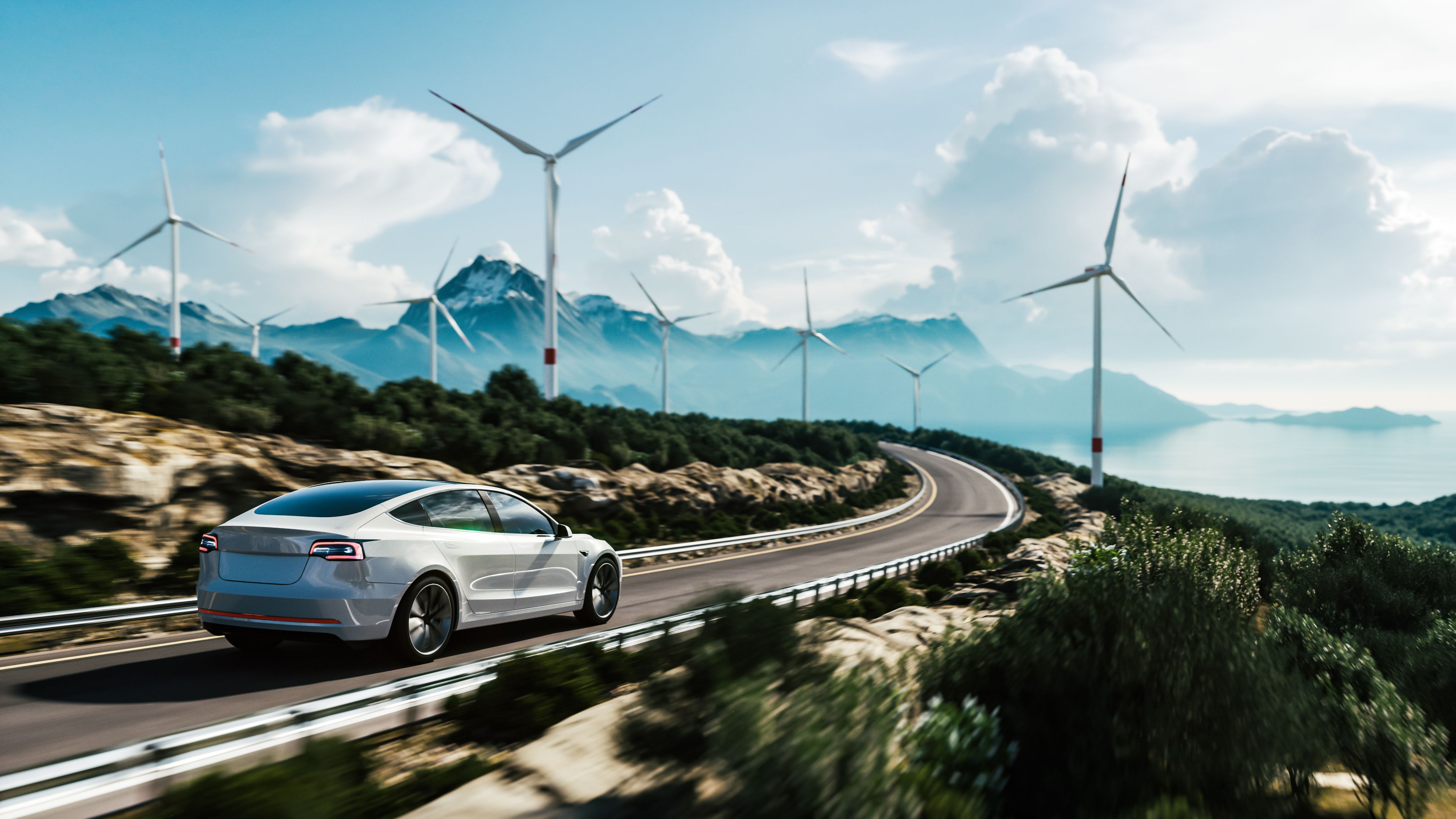
With an increasing focus on sustainability and efficiency in today’s world, it’s become more important than ever to consider the advantages of an electric vehicle.
But when did the technology for electric cars start its journey? You’d be surprised by what is actually a fascinating history that goes back long before the likes of Tesla and Polestar launched their first prototypes in the 2000s. Before buckling up for a drive in your own EV, take a trip through time to find out about the origins of the electric revolution.
- What is EV technology
- When did Electric car technology start?
- How long have we had the technology for electric cars?
- The challenge to early EV technology
- The resurgence of EVs
- The future of EV technology
- When will the new EV battery tech arrive?
What is EV technology?
To make everything super clear from the off, let’s begin with a definition. An electric vehicle (EV) is powered by an electric motor instead of gasoline or diesel. It has a battery – or multiple batteries – that powers the motor, which can be recharged periodically by plugging the vehicle into an electrical outlet or charging station.
Electric vehicles are now offered by a variety of brands and manufacturers, some of which are long-standing automotive household names and others that specialise in EVs only. Electric vehicles can come in many different makes and models, ranging from compact cars to SUVs, high-performance sports cars and even trucks.
When did electric car technology start?
Despite its modern image, EVs have been around for a very long time. The history of EVs dates back to the 19th century when surprisingly they were more popular than traditional combustion engines!
How long have we had the technology for electric cars?
In short, for a lot longer than you might think. The first full-sized electric "vehicle" was an electric-powered carriage created by a Scottish inventor called Robert Anderson in 1832.
A few years later, in 1835, Thomas Davenport, an ingenious blacksmith from Vermont, built a small electric car powered by a battery. It could run for about 15 miles on a single charge. Another early example of EV technology includes an electric tricycle built by Thomas Parker in 1884 that could reach speeds of up to 14 mph.

The challenge to early EV technology
Horse-drawn carriages were still the main mode of transport at the beginning of the twentieth century. However, as America grew in prosperity, people began to switch to the recently developed motor car.
Because of breakthroughs in the gasoline-combustion engine in the 1800s, electric vehicles faced competition on the market from their petroleum-powered counterparts. While combustion engine cars showed promise, they had some major issues to overcome: they needed a lot of human effort to drive — working the transmission was a difficult task – and they needed to be started with a hand crank which took time and effort.
This actually helped the case of EVs, and a lot of people supported the idea that the future of automobiles was destined to be electric car technology. However, EVs started to fall in popularity over time, as combustion engines slowly became more efficient and more affordable.
The biggest blow to the progress of EVs came in the early 20th century in the form of Henry Ford’s mass-produced ‘Model T’. The Model T made gas-powered cars accessible and cheap to the public. In 1912, a combustion car was priced at $650, while the competing electric vehicle cost a whopping $1,750! This meant that though private transportation was now accessible to the masses, unfortunately for the electric vehicle, it was to be gas-powered.
The resurgence of EVs
After that early setback at the beginning of the 1900s, electric vehicles (EVs) spent the best part of a century in the automotive wilderness. However, with an increasing focus on sustainability and reducing fossil fuel emissions, they have once again grown in popularity over the last couple of decades and look set to further increase their presence in our daily lives.
The first turning point is seen as the introduction of the Toyota Prius in 1997. The Prius was the world's first popular electric hybrid. Cheap to buy and maintain, it became an instant success across the world. From Hollywood A-listers to Silicon Valley entrepreneurs, an EV was suddenly ‘the’ thing to have parked on your drive.
The development of battery technology is another factor contributing to the growing popularity of EVs. Recently developed EV batteries have better energy density and driving range than their predecessors, meaning they’ve never been more of a practical choice.
Similarly, the cost of owning an EV has fallen considerably, making them more accessible to consumers. Incentives like tax breaks [CW(S1] are provided by many governments worldwide looking to encourage the adoption of EVs.
Automobile manufacturers are also spending more resources on EV research and development, which has increased the number of electric vehicle models available on the market and pushed the technology further.
There really hasn’t been a more exciting time for EVs!

The future of EV technology
The suggestions are there that EVs will only grow their stake in the automobile market in the next few decades. The only way appears to be up. Bloomberg NEF has even predicted that by 2050, there could be 2200% more EVs on the road worldwide than today!
When will the new EV battery tech arrive?
Some of the most promising EV battery tech, like sodium-ion systems, are expected in the next few decades. These developments should improve EV performance, safety and affordability.
The automotive industry’s transition to EV technology is still in its initial stages. In terms of overall auto production and sales, the U.S. share of EVs is pretty small. By the end of this decade, however, EVs might represent a much greater percentage of the global vehicle industry.
This isn’t another 19th-century fad. In 100 years, electric cars may be the most popular car on the planet and we can’t wait to be a part of it.
Related Articles
Do I Need to Return an EV Rental With a Full Charge?
Hertz offers three great options options to recharge your rental EV. Read about them below.

Are electric cars better for the environment?
As people across the world consider the environmental impact of everyday life, many are exploring ways to reduce their carbon footprint with Electric Vehicles (EVs).

Five Ground-Breaking EVs: What is the Best Electric Car Ever?
Electric cars are becoming more and more innovative, affordable and reliable. As a result they’re now so popular that even some their biggest skeptics are beginning to take notice.
