


Members-only perks


06/16/2022 • 4 min
The Birth of the Sports Car: Cars from the ’50s That Changed America
Explore some of the most iconic sports vehicles in the 1950s that paved the way for modern sports cars in America. Find out more with Hertz.
Shortly after the 1940s slipped into the rearview mirror, automotive America truly broadened its horizons when it came to using an artistic license in vehicle style. The 50s was an iconic decade for classic vehicle looks and engine power previously unseen in classic sports cars.
In the 1950s, cars were as much about style as they were about substance and many of the models are now modern legends. Movies, television shows and countless museums and private collections go the extra mile to ensure that 1950s car culture is preserved, especially when it comes to sports cars.
The ‘50s were a catalyst for the popularity of consumer sports car culture, sparking America's fascination with luxury vehicles and changing the way people expressed their passion for cars.
Take a look at these classic 1950s cars that changed American car culture forever. If you get a chance, take one for a spin to experience the thrill first-hand.
Technical Breakthroughs in the 1950s
The 1950s were an important era for the automobile industry, particularly regarding technical vehicle performance. After the Second World War, mass production pushed major companies such as Ford and Fiat to the forefront. Sports cars became more commonplace and specialist vehicle designers fell behind due to the worldwide adoption of large-scale assembly lines.
This also allowed for mechanical breakthroughs such as air conditioning, auto transmissions, power steering and braking. Most notably, the ‘50s saw the revolutionary introduction of the overhead valve V8 engine, leading to the popular muscle car genre.
1951 Buick LeSabre
Although this was a concept car, the Buick LeSabre is considered by many to be the most significant show car ever made.
Created by designer Harvey J. Earl, who developed the Buick Y-Job concept car in the 1930s, the 1951 LeSabre borrowed heavily from aircraft design elements, including a wrap-around windshield and tail fins. The jet-inspired design also featured advancements like heated seats, a front "jet intake" oval that hid electric lights, and electric lifting jacks that made changing tires easier.
Although the car never made it into production, it introduced the LeSabre name and various innovative features that later made their way into production automobiles.
1953 Corvette
After being introduced as a concept car, the Corvette was rushed into production to capitalize on the enthusiastic public response. It's quite possibly the creation that has made the most indelible mark on car culture.
The first Corvette production car to hit the market had a fiberglass body and was a visual treat, but it lacked the thrill of driving offered by its European competitors. Sales came up short and Chevrolet considered canceling the car, but ultimately decided to continue fine-tuning it instead. It turned a corner in 1955 with the addition of a V-8 engine and a three-speed manual transmission. The rest, as they say, is history.
Dubbed "America's Sports Car," the Corvette has earned a permanent place in automotive history.
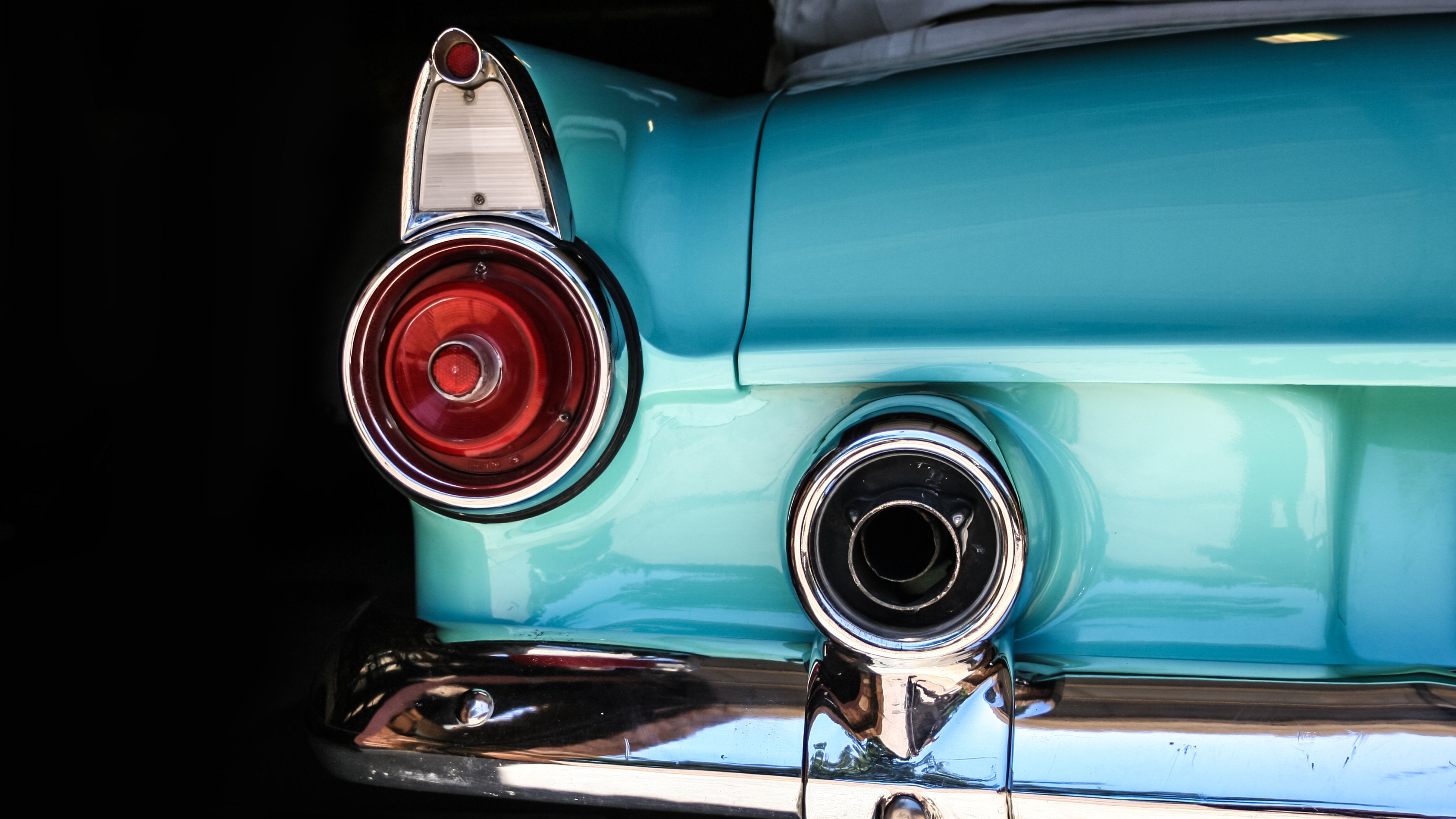
1955 Ford Thunderbird
To compete with the success of Chevrolet's Corvette, Ford rolled out the two-seat Thunderbird. Instead of billing it as a sports car, however, Ford marketed it as a "personal luxury car”.
Bridging the gap between speed and comfortable design, the Thunderbird was one of the forerunners of 1950s sports vehicles. It paved the way for the Mustang to take the helm as the pinnacle of performance for Ford Motors. The vehicle incorporated all the design elements of a full-size Ford and scaled them down into a smooth, sporty design, which turned the car into a sensation. It immediately outsold the Corvette, and Ford continued to make the popular model through the 1957 production year.
Ultimately, the Thunderbird lived on as a four-seater, but sports car enthusiasts point to the original two-seater as an iconic piece of automotive history.
1955 Porsche 550 Spyder
Porsche’s first street-legal racing car, the 550 is notable for several reasons. This lightweight two-seater featured an impressive combination of engineering and aerodynamics. Only 90 Porsche 550 Spyders were made, and it's one of the most frequently replicated cars in the modern era.
Despite their limited production, the car gained worldwide respect and polarity by dominating the Nurburgring Eifel Race, the 24 Hours of Le Mans and the Carrera Panamericana, winning them all in a single year.
1957 Dodge Coronet
One of the wildest interpretations of American muscle, the 1957 Dodge Coronet is an iconic yet polarizing piece of automobile history. Its stylish dual taillights and chrome extensions led to a facelift that changed the coronet from a boring and heavy home car to Dodge’s vision for modern muscle power. Several other models followed the suit of the Challenger’s muscle body look.
They’re quite rare in the wild, so be sure to grab a picture of the car if you ever spot one!
1955 Mercedes-Benz 300SL
From a visual standpoint, the most exceptional feature of this car is the gull-wing doors, which were far ahead of their time. It also earned bragging rights as the fastest sports car in the world, which led to its success as a racing vehicle and made it the envy of many drivers.
Built with an aerodynamic model that was way ahead of its time, the SL 50 won a variety of races, including a 1-2 finish at Le Mans, finishing second in the endurance road race, Mille Miglia in 1952. With only 1400 units built since its launch, the car was incredibly special. Its current rarity puts it at an average worth of $5 million.
Do you have your eye on an amazing sports car from the 1950s? Visit Facebook and tell us about the model you most want to drive
Related Articles

Renting a Car for Someone Else With Hertz
Rent a car on behalf of someone else with Hertz. Learn more about how the process works, additional driver fees and how to add drivers to your agreement.

Call of the Wild: Best American Wildlife Vacations
Enjoy the best that the American wildlife has to offer. A safari experience close to home, see big cats and jungle animals with your Hertz Car Hire today.

How to Pay for Your Car Rental
When it comes to renting a vehicle from Hertz, it's important to know what the accepted payment methods are and if there are any significant differences between them. This knowledge can make your rental experience smoother and get you on the road faster.
