


Become a Hertz Gold+ member


06/17/2022 • 5 min
A Car Before Its Time: The Alfa Romeo BAT Mobile
In the 1950s, Alfa Romeo produced a remarkable trio of space-age concept cars under the umbrella title of BAT. Here’s their fascinating story and legacy.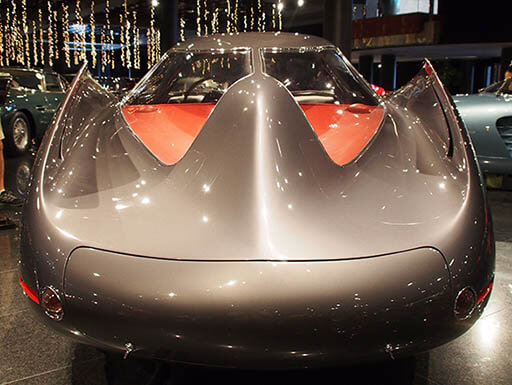
Concept cars have long served as a way for automakers to showcase their vision for the future. These fantasy cars are often packed with breathtaking features that, while radical and exciting, aren't necessarily practical. Many concept cars never materialize into anything more than a scale model — or perhaps just a drawing — but some become one-of-a-kind classics that enthusiasts admire and envy both for their rarity and innovative design.
Among the most notable concept cars in automotive history are a trio of aerodynamic Alfa Romeo cars called Berlina Aerodinamica Tecnica (BAT), which were manufactured in Italy in the 1950s. While the Alfa Romeo concept models are referred to as a BAT mobile, they’re not to be confused with the Batmobile from Batman, an iconic car in its own right.
Automotive historian Mark Lambert said the cars are extremely important to the entire automotive industry because they contained many futuristic design protocols that were eventually seen in production models. They were ultra-aerodynamic and they look so modern that even today, people are stunned to learn that they were made in the 1950s.
Only three of these concept cars were ever created, and all are now on display at Blackhawk Museum in Danville, California.
From the Airways to Highways
With large bumpers and curved fins, the sleek, graceful cars were designed to reduce drag and offer improved stability at higher speeds. To do that, designers tapped into the knowledge gained from World War II aeronautics, taking inspiration from an airplane’s fuselage, which gains more stability the faster it travels.
At that point, stability at high speeds was a huge deficit. Alfa designers were the first to attempt to solve this problem, and they realized they could use the principles of an airframe construction. They ended up with a car that was quite stable at high speeds.
Ahead of the Curve
The first car, the BAT 5, made its world debut at the 1953 Turin Auto Show. The tapered, metallic charcoal body was unlike anything the world had seen before. When the BAT 7 appeared on the scene a year later, designers had raised their game still further to produce a pale blue metallic car with a memorable dorsal fin and curved, inward-leaning tail fins.
One of the problems facing high-speed cars was that designers never knew what to do with the headlights. They created a lot of problems, aerodynamically. But the Alfa designers were able to work around that.
With the BAT 7, the headlamps were hidden, and when Alfa Romeo displayed the BAT 9 in 1955, the lights were tucked into the curved, molded plastic fenders — something that changed the future design of cars.
That idea filtered down into the rest of the automotive world. There are so many things about the way these cars were designed that influenced the rest of the auto industry.

An Unexpected Combo
Despite the ultra-modern appearance, the cars were built on an old Alfa Romeo 1900 chassis, which was a platform the automaker had readily available. A 90 horsepower, four-cylinder engine was all the power it offered.
It was a humble, low-power engine on a dated platform, going up to 85mph, but with the sleek, slippery body on it, it could reach 118mph.
Although some manufacturers' concepts are made for display only, Alfa Romeo made its BAT cars drivable – something that helped ensure they survived.

The BAT's Surviving Legacy
Although the BATs turned heads wherever they went, they were never destined to become production models. The designs required each car to be hand made, and in a post-WWII world, high dollar cars weren't in high demand, regardless of how stunning they looked on the road.
Yet, unlike the majority of concept cars, this trio pulled through. By 1960, all of the cars had been sold off — each to a different buyer — and, miraculously, they all managed to maintain good condition.
It was truly a once-in-a-lifetime phenomenon to have all three of these cars survive and be together. Concept cars are often destroyed for liability reasons, and the tough economic times in Italy during that era presented plenty of opportunity for the cars to be sold off for parts.
Instead, each owner cared for each BAT until an American buyer named Don Williams — who had been fascinated with them since he was a teenager — set out to find all three. Williams, a serious car collector and owner of the Blackhawk Museum in Danville, California, spent decades searching them out and finally brought the cars together.
Today, they sit side-by-side in the museum, except for an occasional trip to the Pebble Beach Concours d'Elegance or, most recently, as the centerpiece of an exhibit on Italian automobiles at the Frist Center for the Visual Arts in Nashville.
Ellen Jones Pryor, communications director for Frist, notes that in many ways, they encapsulate the post-war Italian automobile industry, emerging science, technology, and the inventive expression of form and function. The fact that all of them have kept on in such impeccable condition is nothing short of a miracle.
It’s nothing short of remarkable that not a single one has been burned or damaged. These cars are unlike anything else you'll see – they're irreplaceable. Thousands of concept cars simply disappear and nobody knows what happened to them (chances are they didn't make it). This just makes the Alfa Romeo BAT cars even more special.
What's your favorite concept car of the past or present? Tell us about it on Twitter. And don’t forget to check our blog for more automotive insights.
Related Articles
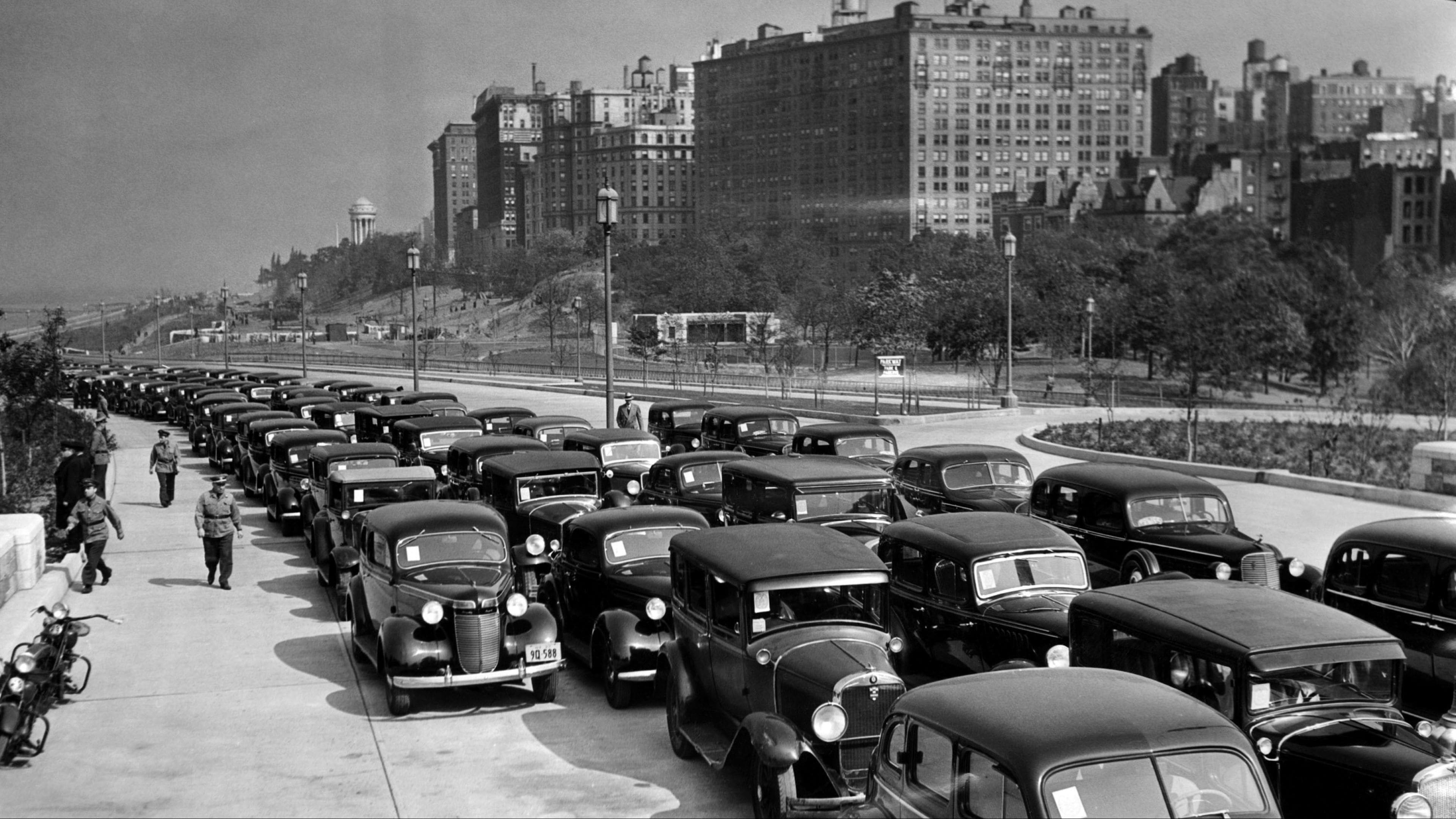
Life During Wartime: How World War II Changed the Auto Industry
In the 1940s, the future of the automotive industry looked bright. Following dramatic innovations in mechanics and body design, discover why the cars were artistic and luxurious.
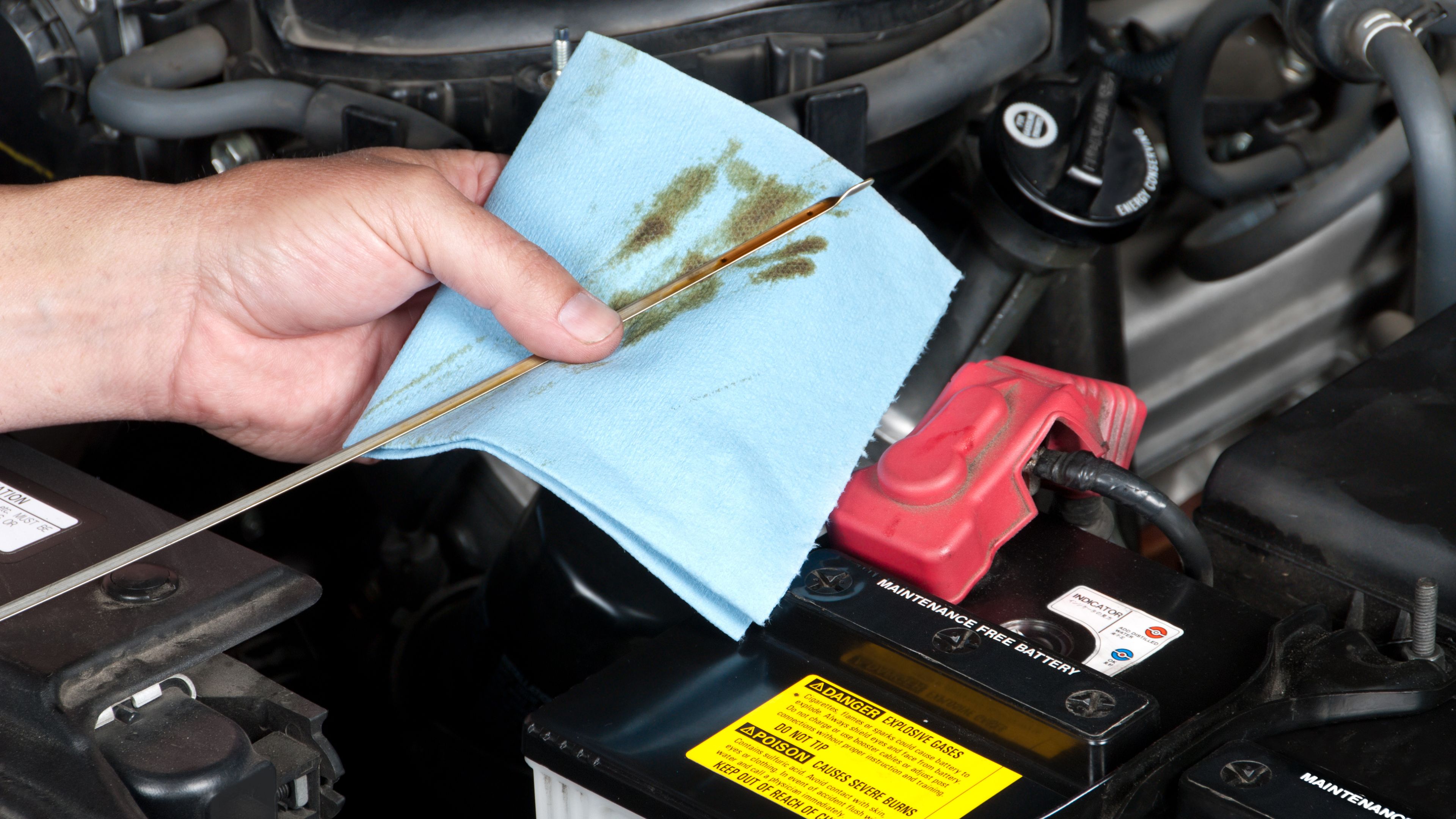
The Pros and Cons of a Do-It-Yourself Oil Change
Do the perks of a do-it-yourself oil change outweigh the potential pitfalls? To answer that question, consider the pros and cons of changing your own oil with this Hertz guide.

Buying a car: are those extra features wants or needs?
Buying a car means choosing from a variety of options. From safety to sunroofs, here is a helpful list of wants vs. needs to consider when car shopping.
