


Members-only perks


06/17/2022 • 3 min
Life During Wartime: How World War II Changed the Auto Industry
In the 1940s, the future of the automotive industry looked bright. Following dramatic innovations in mechanics and body design, discover why the cars were artistic and luxurious.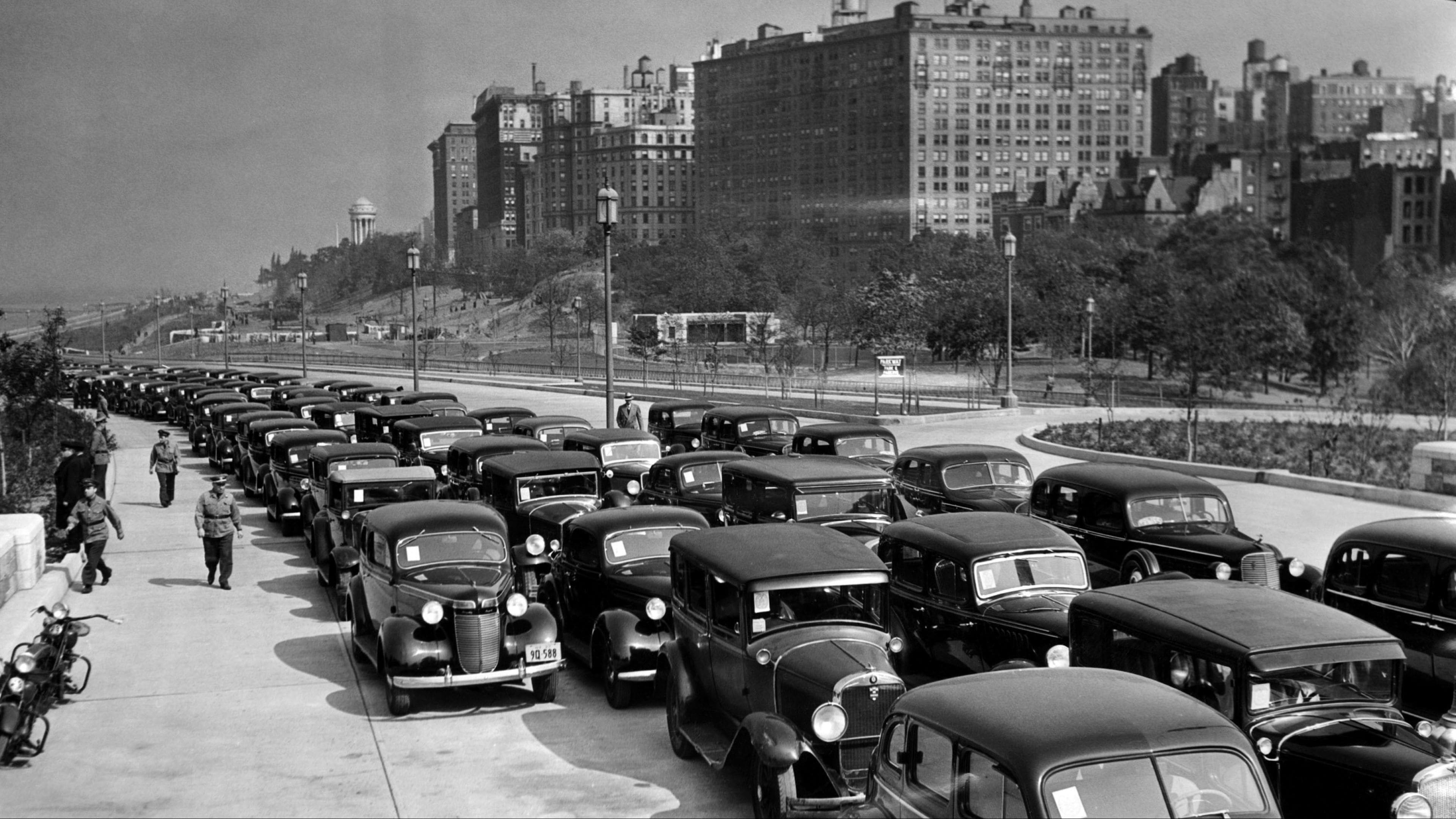
At the start of the 1940s, the future of the automotive industry looked bright. The 1930s had seen dramatic innovations, both in mechanics and design. The cars rolling off the line as the new decade began were both artistic and luxurious.
The 1930s had set the stage for a new approach to design and, for the first time, cars became a status symbol rather than mere transportation. In 1941, Chrysler rolled out its Town and Country wagon, the original precursor to the minivan with nine passenger seats, a rear hatch, and its characteristic wooden panels featured on the exterior.
Cars like the 1941 Packard and the 1942 Hudson were longer, lower, and broader, creating a massive, imposing presence on the road. But just as the auto industry was ramping up, the U.S. entered World War II, and everything changed.
Retooling an Industry
The production of U.S. cars in 1940 hit nearly 4.7 million, but on Jan. 1, 1942, the government froze the sale of consumer vehicles. Instead of working on luxury designs and automotive innovations, automakers were building tanks, trucks, airplanes, Jeeps, torpedoes, and even helmets. Factories stripped down to make way for new equipment, and many car parts were melted were down at steel mills for use in war efforts.
Although commercial production ended, one new automotive trend rose from this era: the military Jeep. The U.S. Army received the first Jeep prototype in November 1940, before America even got involved in the war. Built by the Ohio-based Willys-Overland Motors, the prototype was the Willys Quad. Its heavy torque and durability made it a staple in nearly every branch of the military. More than 300,000 rolled off production lines from 1941 to 1945.
After the war ended, Willys decided to capitalize on the popularity of its wartime innovation and began building Jeeps with the consumer in mind. The company later expanded to include trucks and station wagons, but the Jeep remains that era's most long-lasting and popular contribution to the automotive world.

Post-war Ingenuity
Borrowing some of the design features of planes, the post-war cars introduced massive tail fins and large expanses of chrome. Shiny bumpers, grilles, and headlight casings all presented a gleaming mass of automotive artistry. Meanwhile, innovations were taking place inside the cars, too.
In 1948, Chrysler introduced a car that started with the turn of a key instead of using a hand crank or starter. That same year, Buick debuted the Dynaflow, an automatic transmission that made cars both safer and easier to operate. This innovation made Buick the leader in shiftless driving. While inefficient in terms of fuel economy, it prompted other major changes for 1940s cars. Power windows came on the scene, and cars continued growing in size — a direct reflection of the post-war prosperity enjoyed by most Americans.
Not all automakers weathered the wartime production freeze well. Nash Motors and Hudson merged to form AMC. Packard and Studebaker on the other hand tried to regain their footing with a merger, but never recovered, struggling until they finally closed in the early 1960s. Meanwhile, America's big three — General Motors, Ford, and Chrysler prepared to greet a new decade and celebrate a new era in American automotive prosperity.
What do you consider the greatest auto development of the 1940s? Tell us about it on Twitter.
Related Articles
The Pros and Cons of a Do-It-Yourself Oil Change
Do the perks of a do-it-yourself oil change outweigh the potential pitfalls? To answer that question, consider the pros and cons of changing your own oil with this Hertz guide.

Buying a car: are those extra features wants or needs?
Buying a car means choosing from a variety of options. From safety to sunroofs, here is a helpful list of wants vs. needs to consider when car shopping.

Taking care of business: Putting the cloud in your car to work for you
Connect your car to the cloud and enjoy a seamless driving experience without missing your calls and emails. Learn more about smart connection for productivity.
