


Members-only perks


03/26/2023 • 5 min
Stay safe on the road: Driving tips for rainy weather
Rainy weather can demand more attention from the driver and affect your vehicle’s performance more than you might think. Therefore, it’s crucial to adapt your driving style according to the conditions and pay even closer attention to other drivers on the road.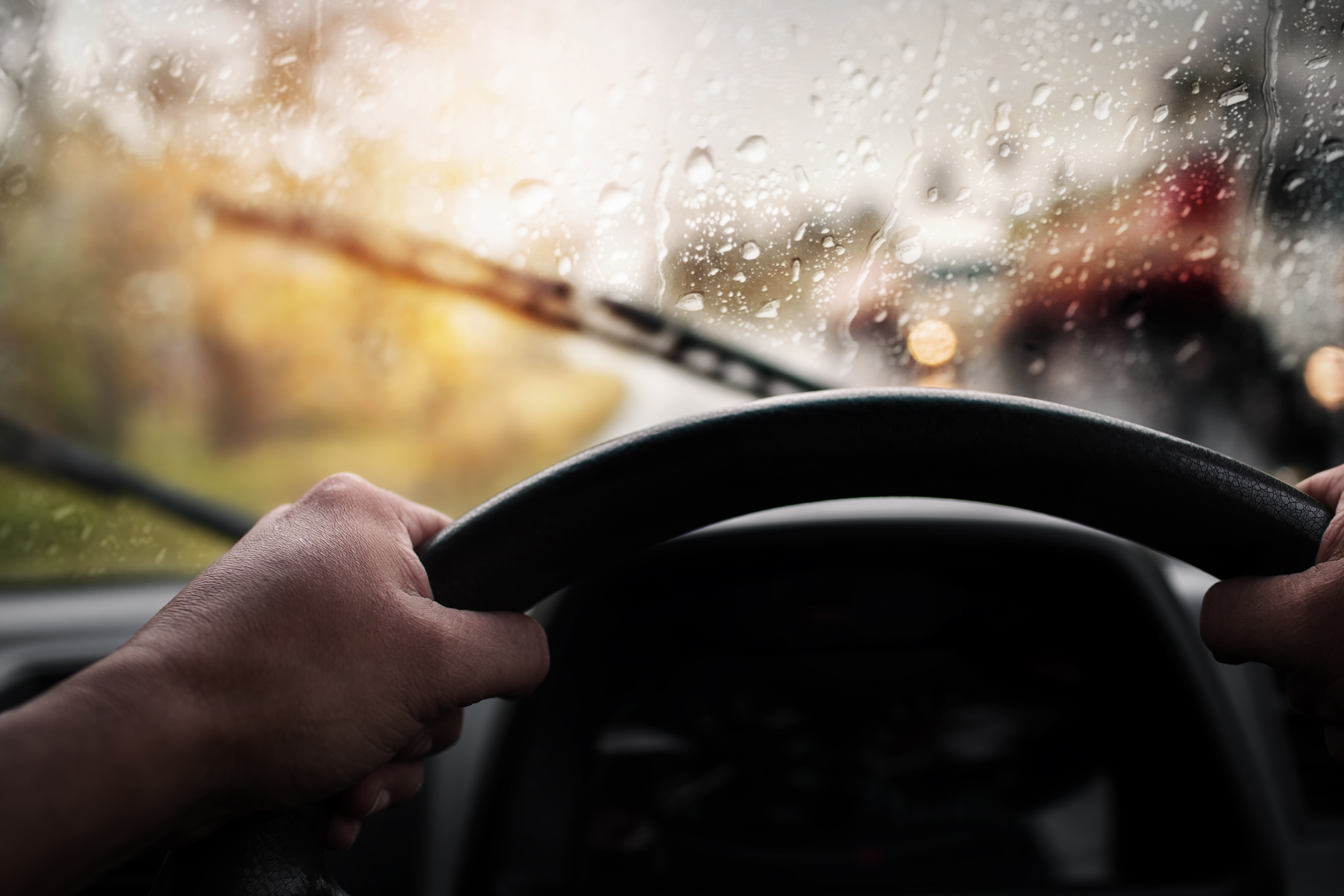
Night or day, rainy weather and surface water can more than double your vehicle’s stopping distance. As your tires have less grip on the road surface, it’s also recommended to cut your speed by a third so that you can brake safely and stop within a good distance if needed. Read on for more driving tips when driving in rainy conditions so you can make your next journey as safe as possible.
Preparing for driving in the rain
Before starting your journey, thoroughly check over your vehicle to ensure you’re prepared for wet conditions. Check your route in advance to see if there are any flooding areas or severe weather conditions and consider postponing your journey if you are able.
If you need to make the journey, there are a few specifics to check so you can travel safely. In most states, a minimum tire tread depth of 2/32 of an inch is required for passing a vehicle safety inspection. Check that your tires are not balding and have enough tread to allow for optimum traction and safe movement through water.
Ensure that your wipers are working effectively at all speeds. To reduce distraction while driving, it’s a good idea to set these to automatic, so you can concentrate on other drivers and the changing weather conditions.
Your vehicle’s lights should be fully operational before every journey. Check that your headlights, taillights, and fog lights are working properly before setting off and remember to adjust lighting according to the changing weather conditions and visibility on the road.
How to drive in heavy rain
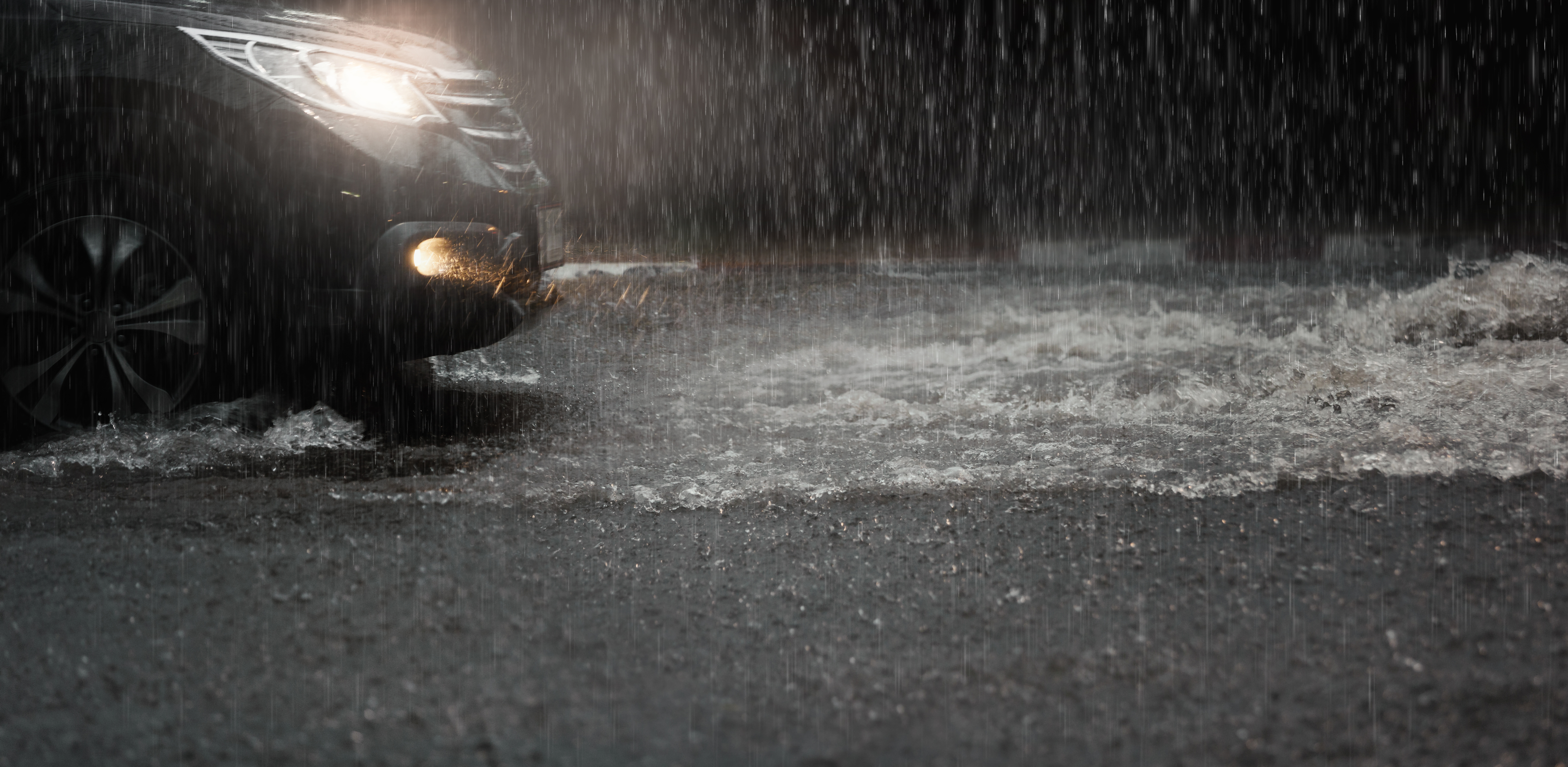
When driving in heavy rain it’s important to consider some key driving tips. The easiest way to stay safe during heavy rain is to cut your speed. It’s therefore advised to reduce your speed by a third or more and leave a generous gap between any vehicles around you. If visibility is low, switch on your headlights, especially if there is less than 1000 feet of visibility.
Switch off cruise control as this can lessen your ability to control the vehicle if you need to take any sudden action. With cruise control activated, your chances of hydroplaning may increase, as you will be unable to manually regulate your speed. Be sure to avoid puddles and deep water and take extra care if you need to brake for obstructions as other drivers will need more time to react if visibility is low.

Driving through water
While it’s best practice to avoid routes with excess surface water, this may not always be possible. If you are driving on a route where you have to drive through water and there is no alternative route, we have a few driving safety tips to help you get through.
While it’s best practice to avoid routes with excess surface water, this may not always be possible. If you are driving on a route where you have to drive through water and there is no alternative route, we have a few driving safety tips to help you get through.
- Don’t cross deep water – if the water looks like it will reach above the center of your wheels, turn around safely and find a different route.
- Don’t cross moving water – underwater currents can be much stronger than they appear and you may risk your vehicle losing grip and floating.
- Drive slowly and in a low gear – enter the water at around 1-2mph and drive through the water at no more than 4mph to prevent your engine from flooding.
- Drive down the center of the road – road surfaces tend to be angled so that water flows out to the edges, so the center is usually shallower.
- Only cross in single file – if other cars are waiting to cross the water, allow only one to cross at a time as this will help cars behind maintain a grip on the road.
- Try your brakes – once you are clear of the water, apply gentle pressure to the brakes so they can dry and become fully effective again.
Avoiding hydroplaning
When driving in wet conditions, you may encounter areas of the road that are partially flooded with water or large puddles. Hydroplaning occurs if you drive into water and your tires lose contact with the road surface as they cannot displace the water fast enough. If your tires cannot displace the water, they will be pushed upwards and suddenly lose traction, meaning you‘re potentially unable to control the vehicle effectively.
The tread on your tires is there to allow water to displace, with a good tire displacing up to four gallons of water every second. This tread channels the surface water into the grooves and out from the tire, allowing maximum contact between the tire and the road surface. It’s critical to ensure that your tires have a deep enough tread. Even slightly worn tires can increase the possibility of hydroplaning in wet conditions.
As your tires need to displace more water at higher speeds, it’s also recommended to reduce your speed according to the amount of surface water on the road. Depending on your vehicle’s weight as well as the design and tread of your tires, hydroplaning is possible at a speed as low as 35mph.
If possible, try to stick to routes with minimal flooding and surface water as this will reduce your risk of hydroplaning and switch off your cruise control so you are fully aware of the feel of the road surface. If a particular area of the road looks to have deep puddles, avoid these when it’s safe to do so.

What to do if your vehicle is hydroplaning
Hydroplaning can happen to anyone and it’s important to know how to react. Keep these driving tips in mind if your vehicle begins to hydroplane:
- Slow down and remain calm.
- Don’t slam on the brakes – a light pumping action on the brake pedal is advised.
- Keep a steady grip on the steering wheel and don’t make excessive movements.
- If you find your vehicle skidding – steer into the skid to help regain traction.
- Avoid stopping once you have control of the car again so you are clear of any oncoming vehicles.
If you have resumed control after hydroplaning, you may want to take a moment to regain composure. Pull up in a safe location away from the area that caused you to hydroplane.
Summary
With these safe driving tips in mind, you’ll quickly get a feel for how to handle driving in rainy weather. Remember to frequently check your vehicle’s lights, tires and windscreen wipers to ensure a smooth ride through adverse weather conditions. Just because the weather was great when you set off, doesn’t mean you won’t encounter rainy weather or storms during your journey, so you must be always prepared.
By renting a car with Hertz, you can be sure that all our vehicles have undergone strict safety checks and are ready to drive when you need them most.
Related Articles

Renting a Car for Someone Else With Hertz
Rent a car on behalf of someone else with Hertz. Learn more about how the process works, additional driver fees and how to add drivers to your agreement.

Call of the Wild: Best American Wildlife Vacations
Enjoy the best that the American wildlife has to offer. A safari experience close to home, see big cats and jungle animals with your Hertz Car Hire today.

How to Pay for Your Car Rental
When it comes to renting a vehicle from Hertz, it's important to know what the accepted payment methods are and if there are any significant differences between them. This knowledge can make your rental experience smoother and get you on the road faster.
