


Become a Hertz Gold+ member


06/30/2023 • 8 min
Guide to Mazda EVs
From fully electric to hybrid vehicles, Japanese carmaker Mazda offers a range of eco-friendly and economical cars. Find out more with Hertz.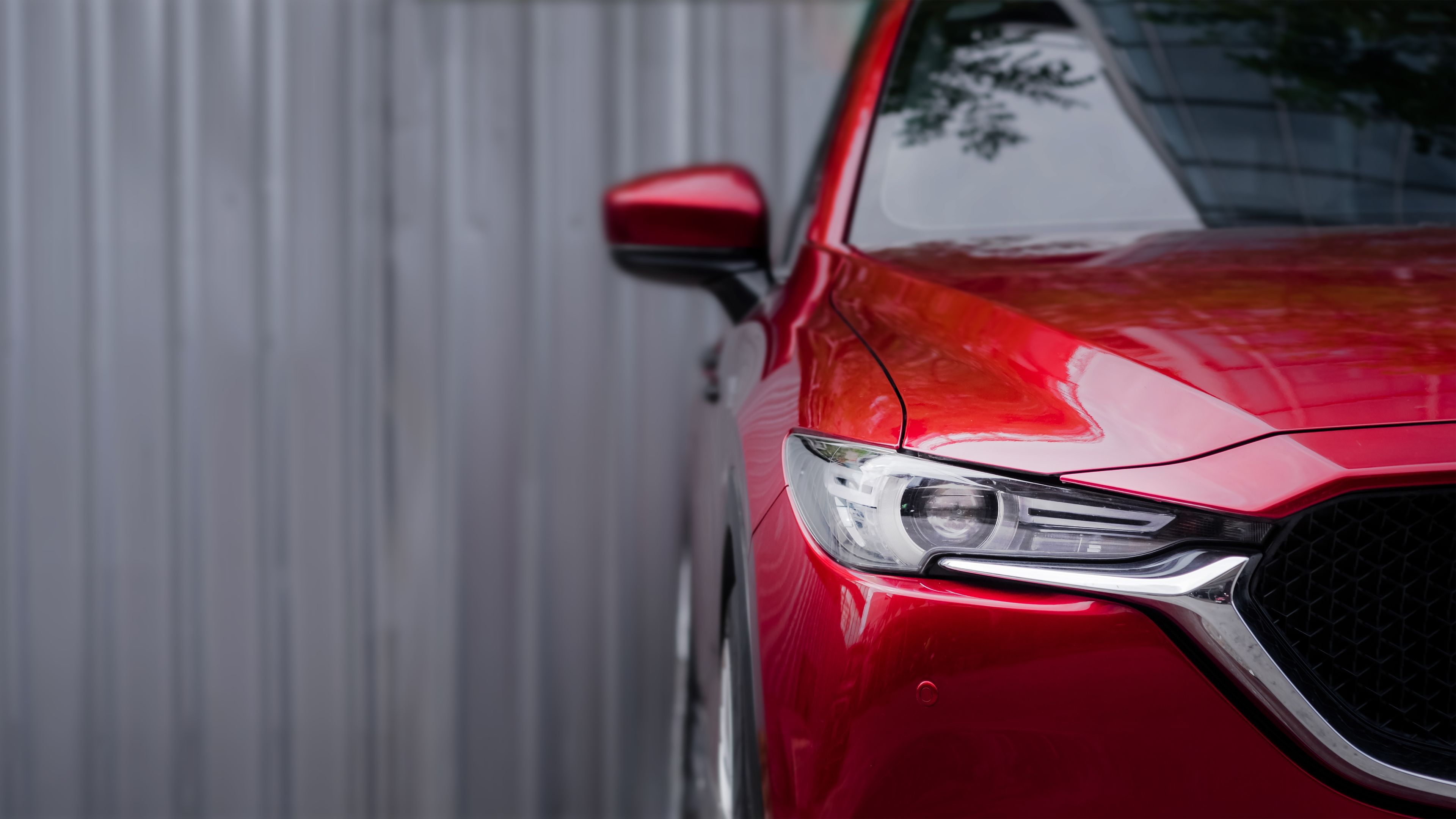
Things are gearing up in the world of electric vehicles. With many major cities placing restrictions on non-EVs and the price of gas continuing to rise, it’s no surprise that more and more people are looking for environmental and economical options when they upgrade their car.
Japanese automaker, Mazda, is one brand making significant strides in the electric vehicle market with its latest lineup of eco-friendly cars. The company has been working on its EV technology for several years and has recently introduced the Mazda MX-30, its first all-electric vehicle.
But what else do they have up their EV sleeve, and what does the future hold for Mazda EVs?
All about Mazda
Mazda was founded in 1920 in Hiroshima, Japan as the Toyo Cork Kogyo Co., Ltd, which originally produced cork and machine tools. In 1931, Mazda began producing three-wheeled trucks called the Mazda-Go. These trucks were very popular in Japan and helped establish Mazda as a major player in the automotive industry.
Mazda started developing its own line of cars in the 1960s, starting with the R360 Coupe in 1960. This was followed by the company's first four-wheeled car, the Familia, in 1963. Throughout the 1970s and 1980s, Mazda continued to expand on its line of cars, introducing models such as the RX-7, the 323, and the MX-5 Miata. The Miata in particular became a huge success and helped to establish Mazda's reputation for producing fun-to-drive, affordable sports cars.
It was in the 2000s that Mazda began to focus on developing environmentally friendly cars, launching its first ever electric car, the Mazda Demio EV, in Japan in 2012. Since then, Mazda has focused more on developing hybrid and plug-in hybrid electric vehicles, such as the Mazda MX-30, which was released in Europe and Japan in 2020 and in the US in the fall of 2021. The electric SUV features a mild hybrid system that is best suited to short and medium-length daily drives such as commuting, running errands, and short trips around town.
Mazda Demio EV
The Mazda Demio EV was released in Japan in 2012 as Mazda's first electric vehicle, but it was only available for lease and was not sold to the general public. It is a subcompact car that is also known as the Mazda2 in some markets.
The Demio EV is powered by an electric motor and has a range of about 200 kilometers (124 miles) on a single charge. It also features regenerative braking to help extend its range and can be charged using a standard household outlet or a dedicated charging station.
While the Demio EV was only available in Japan and in limited quantities, it served as a stepping-stone for Mazda to develop and produce electric vehicles in the future.
Mazda MX-30
The Mazda MX-30 is a subcompact crossover SUV that is classified as a compact or small SUV. It is Mazda's first fully electric vehicle, released in Japan and Europe in 2020, and in the US in 2021. The MX-30 has a sleek design that combines elements of an SUV and a coupe, with a sloping roofline and sporty profile.
The MX-30 has a 35.5 kWh battery pack and an electric range of about 124 miles (200 km). The EV features a range of advanced technologies and driver assistance systems, including Mazda's i-ACTIVSENSE safety suite, which includes features such as adaptive cruise control, lane departure warning and automatic emergency braking.
In addition to its fully electric version, Mazda also offers a plug-in hybrid version of the MX-30. Plans have been announced to introduce a plug-in hybrid version of the CX-5 SUV in the near future.
Mazda3 Hybrid
The Mazda3 Hybrid is a compact car that features a hybrid powertrain with a 2.0-liter gasoline engine alongside an electric motor. It has a combined system output of 186 horsepower and is available with front-wheel drive or all-wheel drive.
Impressive for a non-plug-in hybrid model, the Mazda3 Hybrid has an EPA-estimated fuel economy of up to 53 miles per gallon in the city and 52 miles per gallon on the highway. It also features a range of advanced technologies and driver assistance systems, including Mazda's i-ACTIVSENSE safety suite, with features including adaptive cruise control, lane departure warning and automatic emergency braking.
The Mazda3 Hybrid is designed to offer a balance of performance, efficiency, and style, and it is aimed at customers who want a practical and environmentally friendly car that also offers a fun driving experience.
Mazda CX-30 Hybrid
The Mazda CX-30 Hybrid is a subcompact crossover SUV designed to offer high performance, efficiency, and practicality, and it is aimed at customers who want a versatile and environmentally friendly vehicle.
The hybrid powertrain consists of a 2.0-liter gasoline engine and an electric motor, with a combined system output of 181 horsepower. The model is available with front-wheel drive or all-wheel drive and has an impressive EPA-estimated fuel economy, of up to 36 miles per gallon in the city and 33 miles per gallon on the highway.
The CX-30 Hybrid also features a range of advanced technologies and driver assistance systems, including Mazda's i-ACTIVSENSE safety suite.
Mazda MX-30 R-EV Plug-in Hybrid
The MX-30 R-EV Plug-in Hybrid offers drivers a balance of performance, efficiency, and style, ideal for customers who want a versatile and environmentally friendly vehicle that can handle both short commutes and longer trips.
Currently available only in select markets but expected to launch in the US in 2023, the subcompact crossover SUV has a combined system output of 190 horsepower and an electric-only range of up to 53 miles.
The MX-30 R-EV features a plug-in hybrid powertrain consisting of a 2.0-liter gasoline engine, an electric motor, and a 14.1 kWh battery pack. It also comes with a range of advanced technologies and convenience features, including Mazda's i-ACTIVSENSE safety suite, a 7-inch digital instrument cluster, and an 8.8-inch infotainment system with support for Apple CarPlay and Android Auto.
Future Mazda models
Mazda has committed to transitioning to electric vehicles in the coming years as part of its sustainable Zoom-Zoom 2030 initiative. The company plans to offer a range of EVs, plug-in hybrids, and hybrid vehicles to meet the needs of different customers and driving situations.
The Japanese manufacturer has also announced plans to launch its first dedicated EV platform, which will be used to develop a range of new EV models. This platform will support Mazda’s aims to have EVs account for 25% of its sales by 2030, and to achieve carbon neutrality across its entire value chain by 2050.
To achieve this goal, the company is investing in research and development of EV technology, as well as improving the efficiency of its internal combustion engines.
Overall, Mazda is committed to offering a range of sustainable vehicles that meet the needs of its customers while reducing the impact on the environment. As a trusted and well-established brand, Mazda’s electric vehicle offerings are set to become market-leaders thanks to their versatility and reliability, and the company’s dedication to investing in the advancement of EV technologies. Drivers keen on Japanese electric vehicles might also be interested in Nissan, Toyota, and Honda’s EV offerings.
Ready to kick-start your all-electric adventure? Rent an EV with Hertz.
