


Members-only perks


06/16/2022 • 4 min
How Actress Hedy Lamarr Laid the Foundation for GPS
Legendary actress Hedy Lamarr was a woman of many talents. Learn how her inventions opened the door to modern GPS, Wi-Fi and more.
Hedy Lamarr was one of the most famous actresses of her time, whose beauty was the inspiration behind iconic characters like Catwoman and Disney’s Snow White. Her illustrious co-stars included Hollywood hotshots Clark Gable and Jimmy Stewart. You’d be forgiven for thinking that she was just a pretty face during the Golden Age of Hollywood, but you’d be mistaken.
Hedy was born in Austria and fled Europe just before the Second World War and, along with her film credits, she is credited with inventing the technology that led the way for modern GPS and Wi-Fi technology. She used her downtime between films to draft ideas to help the war effort against the Nazis. Nowadays, we use an offshoot of this breakthrough technology to help us navigate when driving.
Lamarr and her neighbor, film score composer George Antheil, invented a frequency-hopping system that jammed radio signals, making it difficult for the enemy to intercept them. It was based on the 88 keys of a piano and was intended to be used on torpedoes. Lamarr was inspired to develop the technology after German submarines started attacking civilian ships during World War II. Her goal was to help the Allies and she donated the top-secret 1942 patent to the Navy. Despite this generous gift, the Navy didn't use the technology until the Cuban Missile Crisis in the 1960s.
The Birth of New Technology
As with many technologies, the original frequency-hopping system led to additional innovations over time that eventually resulted in the spread-spectrum wireless communications used not only in GPS, but in mobile phones, Wi-Fi, and Bluetooth technologies. To some extent, all these technologies originate from Lamarr and Antheil's war-time invention. Although the pair never made money from the technology, they were finally recognized for their work in 1997 by the Electronic Frontier Foundation, which granted them the Pioneer Award for their significant and influential contributions to computer-based communication technology. They were also posthumously inducted into the National Inventors Hall of Fame in 2014.
The transition from frequency hopping to spread-spectrum technology began when Sylvania Electronics Systems changed the concept to use an electrical device instead of a mechanical one during the Cuban Missile Crisis. Later advances that led to GPS, Wi-Fi and cellular signal technology had its roots in Sylvania's now-expired patent.
From Glamorous Star to Inventor
So, how did the former Hedwig Eva Maria Kiesler, a Jewish refugee and glamorous actress, know so much about science and technology? She learned about military and radio technology during her unhappy first marriage to Friedrich Mendl, a munitions manufacturer. He appreciated her mathematically oriented brain and sometimes took her to business meetings. Ironically, her husband's business success also meant they hosted Adolf Hitler and Benito Mussolini in their Viennese home several times.

Lamarr eventually left her husband and fled to Paris, where she caught the eye of MGM's Louis Mayer. She turned down what she considered Mayer's low-ball offer to make her into a Hollywood star, but she didn't give up. In fact, she booked passage to America on the same cross-Atlantic ship as Mayer. By the end of the journey, she had a much better deal that led to success as one of the most famous leading ladies on the big screen.
Although she was an actress by day, Lamarr wasn't interested in the typical starlet scene. Instead, she installed a drafting table in her home and spent much of her free time coming up with new inventions and designs. The frequency-hopping technology wasn't her only inspiration, although it was the most successful. She invented a new traffic signal that was never used and an antacid-type tablet that made soda from water. She also designed new wings for Howard Hughes' airplane, the Spruce Goose.
In a changing world, Hedy Lamarr proved her value as far more than just a thespian. Think about her next time you turn on your GPS system to guide you to your destination.
What are your favorite stories of influential women who helped shape the world? Share them with us on Facebook.
Related Articles
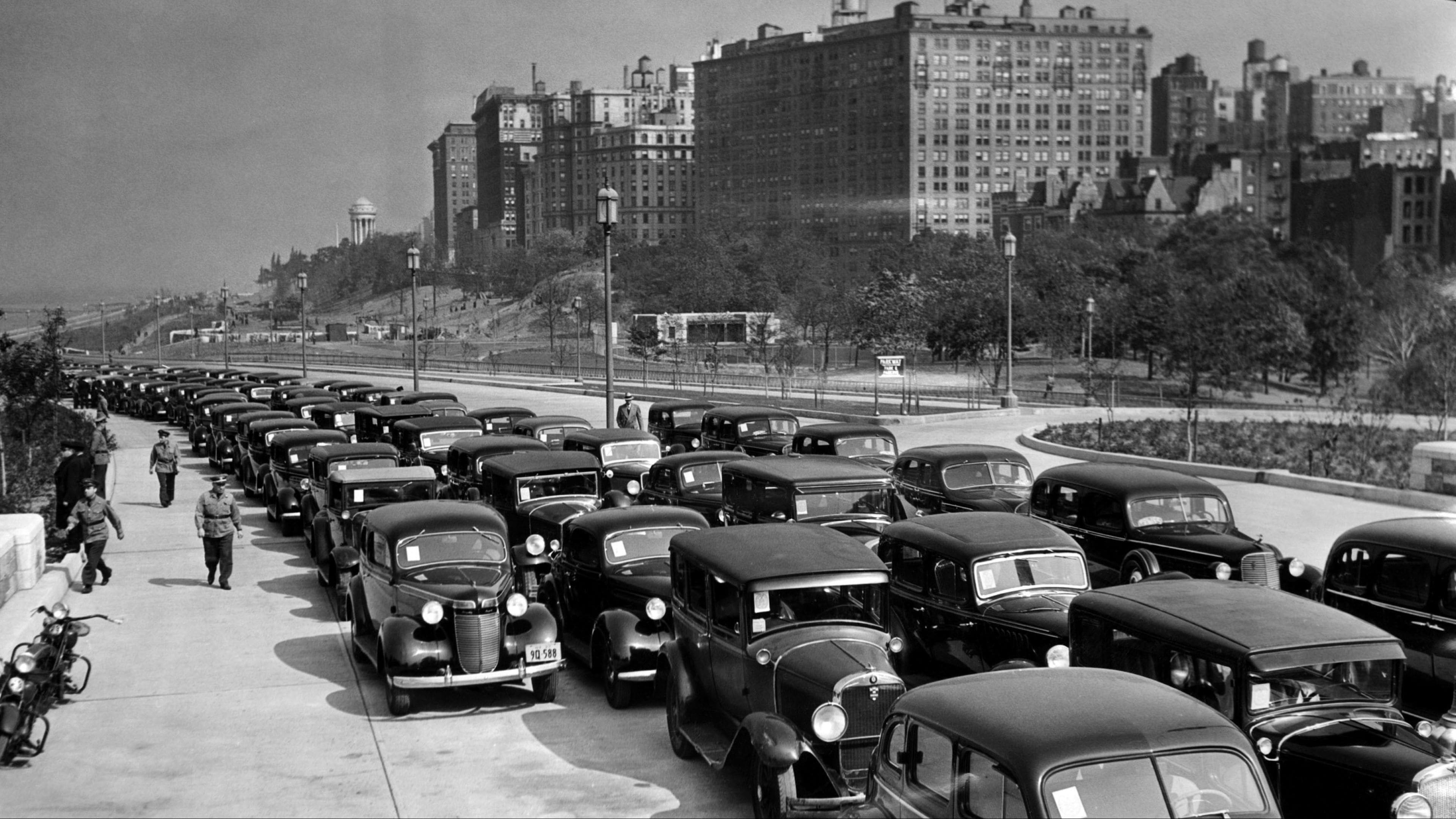
Life During Wartime: How World War II Changed the Auto Industry
In the 1940s, the future of the automotive industry looked bright. Following dramatic innovations in mechanics and body design, discover why the cars were artistic and luxurious.

The Pros and Cons of a Do-It-Yourself Oil Change
Do the perks of a do-it-yourself oil change outweigh the potential pitfalls? To answer that question, consider the pros and cons of changing your own oil with this Hertz guide.

Buying a car: are those extra features wants or needs?
Buying a car means choosing from a variety of options. From safety to sunroofs, here is a helpful list of wants vs. needs to consider when car shopping.
