


Become a Hertz Gold+ member


08/06/2024 • 6 Mins
Top 10 Pisa Attractions
Mention Pisa, Italy, and one attraction immediately springs to mind: the famous Leaning Tower. Even with this iconic site among the most visited, there’s an array of historical gems surrounding this architectural wonder, making Pisa a must-visit destination.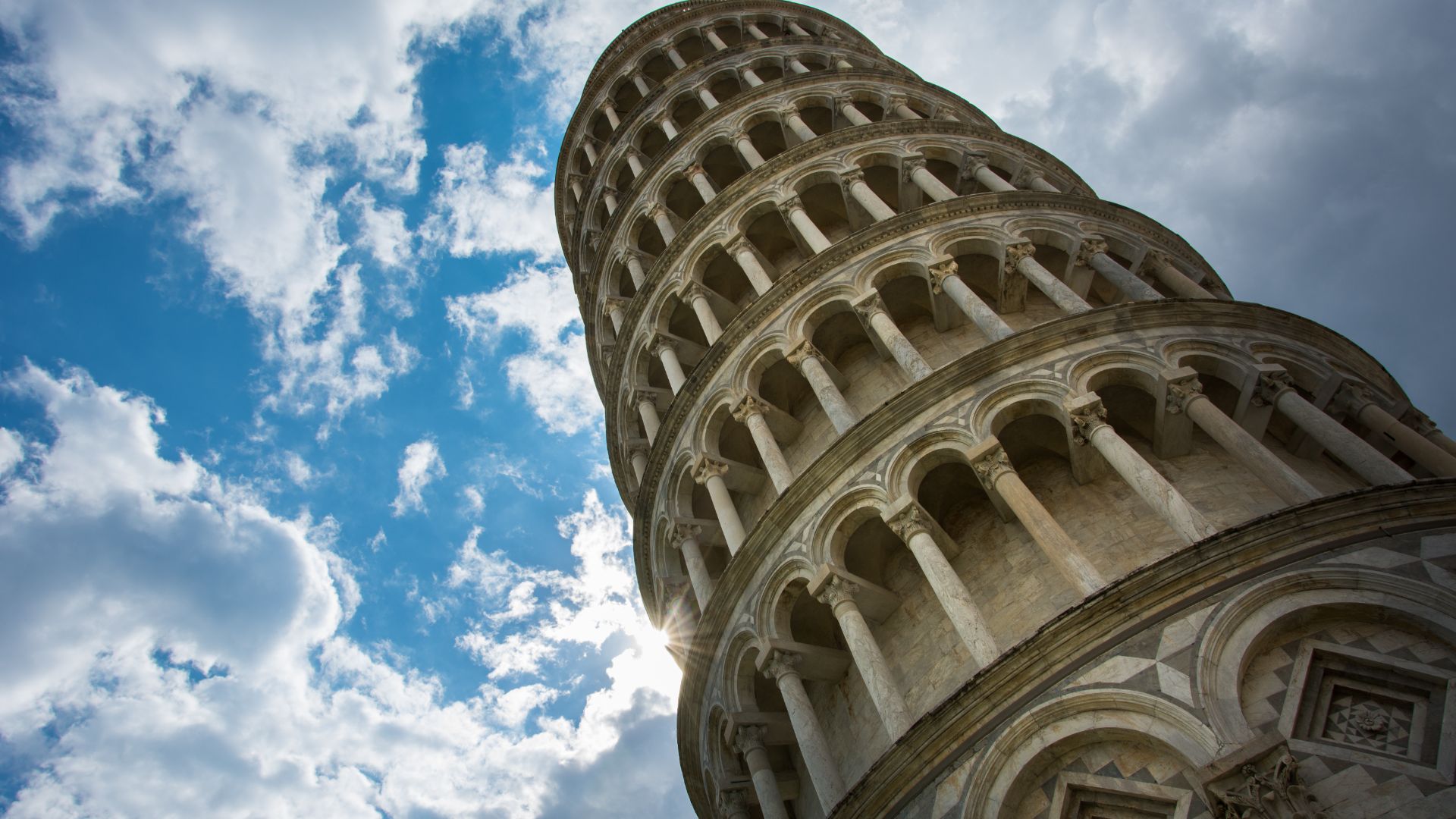
Home to the intriguing Italian squares where you can spend an afternoon in the sun, this is an ancient city filled to the rafters with art, history, and Tuscan treats to tantalize the taste buds.
The Leaning Tower of Pisa
Construction first started on the Torre Pendente – more popularly known as the Leaning Tower of Pisa – as far back as 1173. It wasn’t actually finished until 1372, so the original architect never saw his design come to fruition – nor the alarming lean it soon adopted.
The tower started to tilt soon after its construction thanks to a failure to spot a layer of particularly weak soil, which was unable to support its foundations. By 2007, the tower gained a tilt too unsteady for the public, so it closed temporarily. However, remedial work made it safe again, and it’s now able to accommodate up to 40 visitors at a time. Once you climb to the top of its 251 steps, the vistas of the city below are well worth the work. Follow in the footsteps of none other than Galileo and climb to the top, or join the droves of visitors outside to catch a quirky snap – usually arms stretched out, pretending to support the tower – alongside one of history’s most famous feats of architecture.
Pisa Baptistery
Right next to the leaning tower you’ll find the Battistero – the Pisa Baptistery. Like its neighbor, it took a long time to finish, with construction spanning two centuries from 1152 to 1363. It combines Romanesque and Gothic elements, and uses marble generously. While the interior is relatively plain, its scale and shape are still awe-inspiring today. Inside, there’s a 13th-century font and a fine pulpit, designed by Italian sculptor Nicola Pisano. A little-known fact about the Baptistery is that it shares the same foundations as the Leaning Tower, which means it also leans, albeit far less dramatically.

The Square of Miracles
There can be few squares in the world as striking as the Piazza dei Miracoli. Wander into the square and you’ll feel like you’ve stumbled across the meeting point of some of Italy’s best architects.
In this square alone, you can find the leaning tower, the baptistery, the cathedral, and the cemetery – the Camposanto Monumentale. All of which have symbolic and religious value, the latter three representing birth, life, and death. Find a vantage point and drink it all in before exploring the buildings. Tickets to the tower also include access to the cathedral. It was the first building erected here, with work lasting from 1064 until 1118. It appears almost candy-striped thanks to its two-tone marble facade, while the interior is just as remarkable as the exterior.
The Giardino di Scotto
The Giardino di Scotto – or Scotto’s Garden – is a park based around an old fortress called the Cittadella Nuova. As a green oasis in the heart of the city, it comes with a lot of history. The Florentines built the fortress in 1468 when they ruled Pisa, and the Scotto family bought it centuries later and established the gardens. It was a private estate from the 18th through the 20th century before being opened up to the public in 1939. Soon enough, it became a popular place for native Pisans to take a stroll. If you’re visiting in summer, chances are you’ll come across live theater performances, concerts, and outdoor film screenings. The old walls surrounding the garden have also been restored, allowing you the chance to see the park from a different perspective.
Camposanto Monumentale
The final part of the jigsaw around the Piazza dei Miracoli, the Camposanto Monumentale –monumental cemetery – is said to lie on soil that was removed from Golgotha, or Calvary, during the Crusades.
Whether that’s true or not is immaterial, venture here and you’ll discover a serene place. The bombs of World War II damaged cloisters and their frescoes, but those that remain are gorgeous and have been sensitively restored, while the awe-inspiring arches and Gothic tabernacle make this an enviable resting place.
Palazzo Blu
For an insight into Pisa’s other great love, visit Palazzo Blu and stroll through centuries of artistic flair. Essentially a city-based time machine, this museum will take you through the centuries, allowing you to watch the evolution of Pisan art unfold before your eyes. It’s not just inside where the gallery dazzles. The 14th-century building earned its name from the shimmering azure-blue exterior that makes it stand out from the other fantastic feats of architecture in the city.
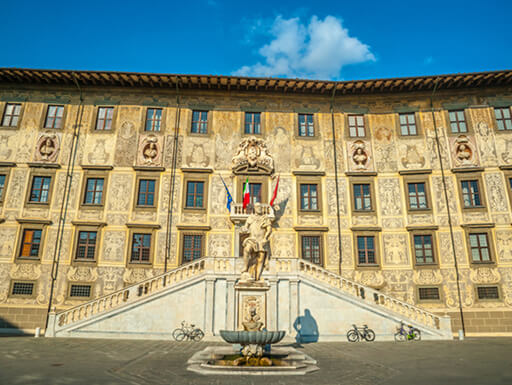
Scuola Normale Superiore di Pisa
The Piazza dei Cavalieri – or knights’ square – was once the home of politics in Pisa, and the imposing Palazzo della Carovana was where much of the city’s destiny was decided.
Today, the restored palace hosts one of Italy’s finest universities, the Scuola Normale Superiore di Pisa, founded in 1810 by order of Napoleon. At the center you’ll find the admirable Grand Duke of Tuscany in 16th-century statue form – a nod to the Order of the Knights of Santo Stefano who were once housed here.
Ponte di Mezzo
Spanning the Arno River in the heart of the city, the Ponte di Mezzo is the bridge that links two of Pisa’s main squares: Piazza XX Settembre and Piazza Garibaldi. The old bridge was lost during World War II, which essentially left the city split in two. The modern replacement is as beautifully crafted as the original, which is why it’s become such a popular place to get that vacation photo. From the bridge, you can look down into the river for a reflected view of the city on either side of the Arno.
San Matteo National Museum
Local pride couldn’t be more evident than at the Museo Nazionale di San Matteo. The treasures are ecclesiastical in nature, with Pisan and Tuscan paintings, and treasured sculptures from Donatello and Pisano. Together with illuminated manuscripts and vintage ceramics, they form a beautiful collection of medieval, religious masterpieces that give you an insight into what has influenced Pisan and Tuscan life through the centuries. All of this is gathered in what was once a Benedictine convent, which is itself a joy to visit.
San Rossore Park
One of the lesser-known things to do in Pisa, the 11,860-acre San Rossore Park was opened in 1979 and forms part of a larger natural park, which covers 60,000 acres.
Just a 10-minute drive from the center, it feels a world away from the city. Its towering pine trees and numerous paths make it the perfect place to take a stroll when the bustle of the city gets a little too much. It’s home to rare fauna and flora, washing the park over with a blanket of color. Highlights include animal observatories, the small Gombo Beach, and being able to settle down on the grass for a family picnic.
Related Articles
10 ways successful people spend their free time
Most people are curious about the productivity hacks and workday schedules of highly successful people – but what about how they spend their free time?
Experience the Grand Canyon at night
Discover the breathtaking beauty of the Grand Canyon at night. Star-filled landscapes are the perfect setting for a memorable visit. Plan today with Hertz.

A Guide to the Best Jazz and Blues Clubs in St. Louis
Whether you’re a jazz and blues fan already or keen to learn more about both genres of music, a visit to St. Louis should be top of your to-do list with a Hertz car rental.

A road trip through Virginia’s civil war sites
With more than 2,000 significant events recorded, discover why Virginia is the ideal spot to hit the road and see some of the best historic Civil War sites.
