


Become a Hertz Gold+ member


08/06/2024 • 6 Mins
Top 10 Palermo Attractions
Palermo isn’t your typical Italian city. As Sicily’s largest town, it occupies a place on the edge of Europe where the flavors and architecture from multiple cultures have combined into one lively area.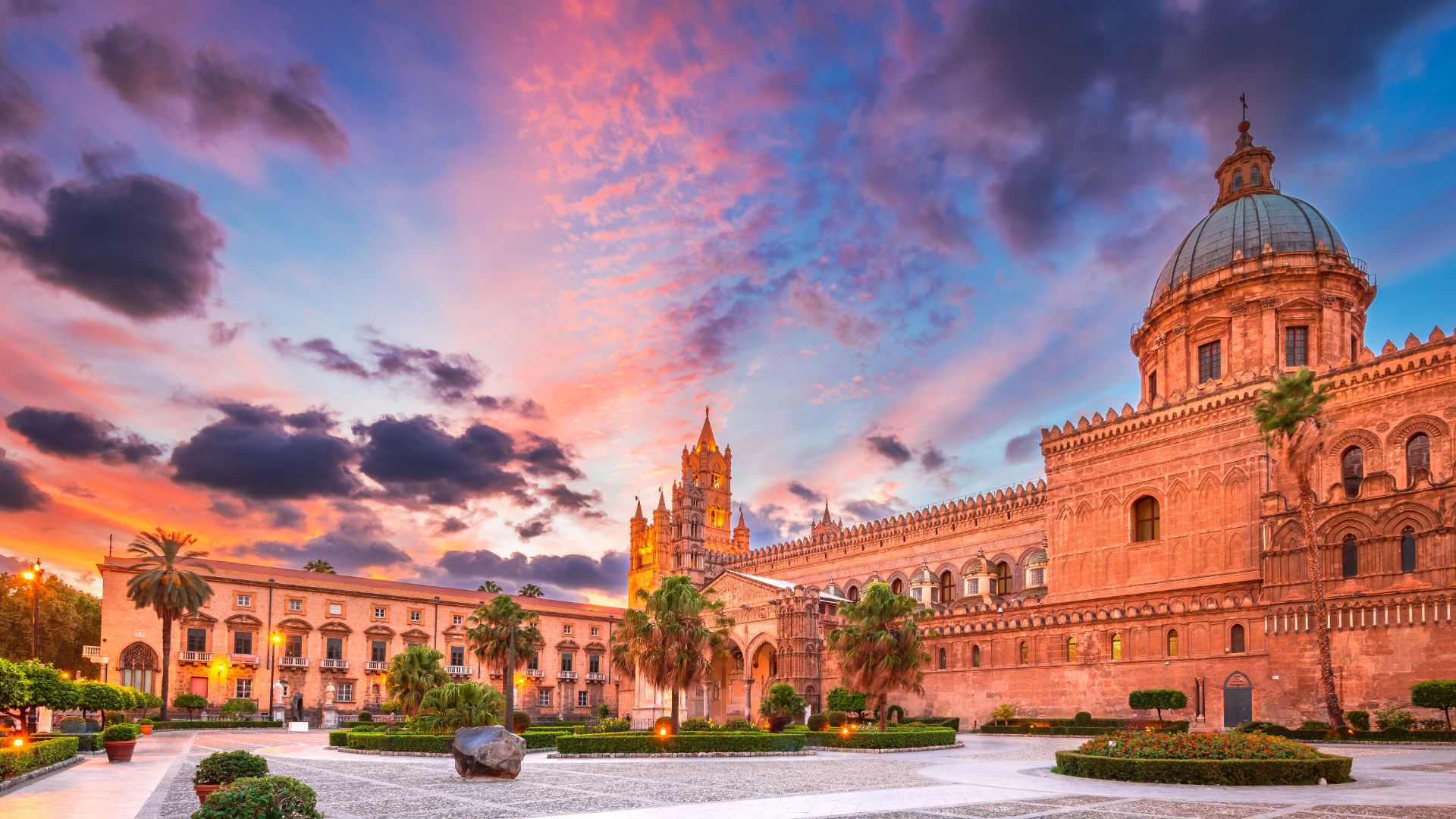
As well as places that are purely Italian that resemble ancient towns of the mainland, you’ll find remnants from Norman times, influences of Spanish settlers, and more than a dash of Arabian flair here.
The mix of cultures and civilizations makes Palermo a fascinating place to visit, as does the strong local pride. It’s no wonder why it’s one of the most favored cities in Italy.
Cattedrale di Palermo
You would struggle to place the Cattedrale di Palermo into any specific architectural school. It reflects the cultures of many people who have influenced Palermo over the centuries and have sought to leave their mark. Originally, the site was home to a Byzantine basilica, which was transformed into a mosque after the 9th-century Saracen invasion.
The current church, however, was built in 1185 and has since gone through a number of its own changes. It’s a fascinating collection of influences, and despite the chopping and changing, there are some incredible sights here. A 15th-century portico, the treasury, and the Norman tombs are among the top picks to see.
Teatro Massimo
On Piazza Verdi you’ll find Teatro Massimo, which was built in the late 19th century and is one of the three largest opera houses in Europe. In fact, it’s the largest in Italy. It’s a fine neoclassical building that will be familiar to movie buffs – some scenes from The Godfather, Part III were filmed here. Regardless, you can come as a tourist for a guided tour in English and soak up excellent views from the rooftop. If you’re an opera or ballet fan, the Teatro attracts stars of international renown, and you can book online to enjoy an unforgettable atmosphere in a truly spectacular setting.
Palazzo dei Normanni
One of the absolute highlights of Palermo is the Palazzo dei Normanni, with its gorgeously ornate Palatine Chapel. The palace was erected in the 9th century and then rearranged by the Normans, who added the chapel. This addition dates from 1130 and was designed by Roger II as a sensation for the senses, mixing Norman and Arabic styles in glossy marble, gold, and stained wood depicting dramatic Biblical scenes.
Ballaro Market
There are a number of bustling markets in Palermo, all of them teeming with Sicilian life, but the Ballaro might just be the best of them. It’s open every day and is a fantastic place to shop for local food, soak up the often-chaotic, thriving atmosphere, watch the world go by from a café, and see life as it’s lived in Palermo. To make the most of the aromatic food offering, there are quite a few local foodie tours you can join, where you’ll get a taste of local history and sample a wealth of fresh treats.
Fontana Pretoria
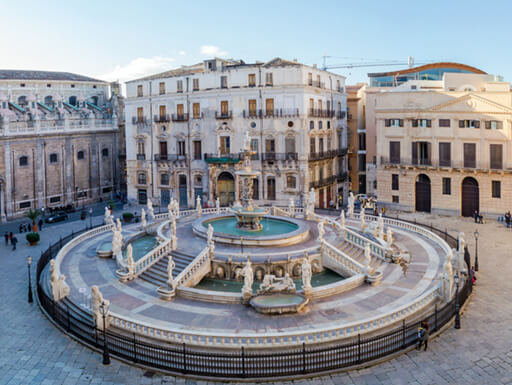
On Piazza Pretoria, you’ll find the Fontana Pretoria. This spot is popular with locals and visitors alike and is one of the most photographed sights in the city. It’s a local landmark in Italy, but it was actually built in Florence in the middle of the 16th century before being relocated to Palermo in 1574. It was damaged during the move, but other additions were soon made to it. For various reasons, but mostly because of the ample nudity of the statues, it’s also known as the Fontana della Vergogna – the Fountain of Shame.
Galleria Regionale della Sicilia
Almost certainly the best gallery in Palermo, the Galleria Regionale della Sicilia is notable not just for the quality of its art collection, but also for its setting. Housed in the charming Palazzo Abatellis, a sedate 15th-century building, it contains works from Sicilian artists spanning the Middle Ages to the 18th-century. Highlights include the Triumph of Death, an icon of Italian Gothic art, as well as Messina’s L’Annunciata from the 15th century among a myriad of fascinating works.
Capuchin Catacombs
You don’t want to see this attraction if you scare easily, and it may even help if you have a taste for the macabre. The Capuchin Catacombs of Palermo are certainly a tourist attraction with a difference. Bestowed with enormous local and historical importance, the bodies of the deceased tell a vivid tale about Palermo customs and reverence for the dead. There are some 2,000 skeletons here, and it provides a haunting but fascinating display of ritual in the heart of Palermo.
Cattedrale di Monreale
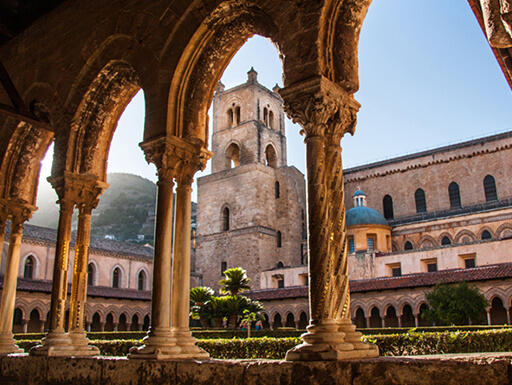
A few miles outside of Palermo in Monreale lies one of Sicily’s treasures. The Duomo – or Cattedrale di Monreale – is an exquisite example of Norman architecture. It was built by William II, who is the grandson of Roger II, who developed the Cappella Palatina in Palermo. The Duomo is an imposing masterpiece, built as a testament to William II’s power, and is adorned with incredible frescoes and mosaics with Arabic and Norman influences for a truly unique architectural gem. It’s more than worth the brief journey out of the city.
Santa Maria dell’Ammiraglio
A superb example of Sicily’s blended history, La Martorana – also known as Santa Maria dell’Ammiraglio – is a church that was originally planned as a mosque and contains both Norman and Byzantine elements. It was built in the 12th century by George of Antioch at the behest of the king and, in addition to Christian imagery, contains Islamic inscriptions. The golden mosaics retain their luster and beauty, even though many were removed or ruined by Benedictine nuns in the 15th century.
Castello Utveggio
There’s a touch of eccentric among Palermo’s already chaotic architectural heritage in Castello Utveggio. It sits on the spectacular Mount Pellegrino, perched over Palermo, affording amazing views. It’s a pink Neo-Gothic castle finished in 1933, and in its past lives, it operated as a casino and hotel before opening to the public in 2014. The views are exceptional – German writer Goethe waxed lyrical about them on a visit – while the park is an idyllic oasis.
Have we overlooked something in Palermo you’re passionate about? Let us know your favorite spots to visit on Twitter.
Related Articles
10 ways successful people spend their free time
Most people are curious about the productivity hacks and workday schedules of highly successful people – but what about how they spend their free time?
Experience the Grand Canyon at night
Discover the breathtaking beauty of the Grand Canyon at night. Star-filled landscapes are the perfect setting for a memorable visit. Plan today with Hertz.

A Guide to the Best Jazz and Blues Clubs in St. Louis
Whether you’re a jazz and blues fan already or keen to learn more about both genres of music, a visit to St. Louis should be top of your to-do list with a Hertz car rental.

A road trip through Virginia’s civil war sites
With more than 2,000 significant events recorded, discover why Virginia is the ideal spot to hit the road and see some of the best historic Civil War sites.
