


06/05/2023 • 5 min
San Antonio driving guide
Driving and parking in San Antonio in San Antonio doesn’t need to be difficult, use this driving guide to learn the rules and make the most of your trip.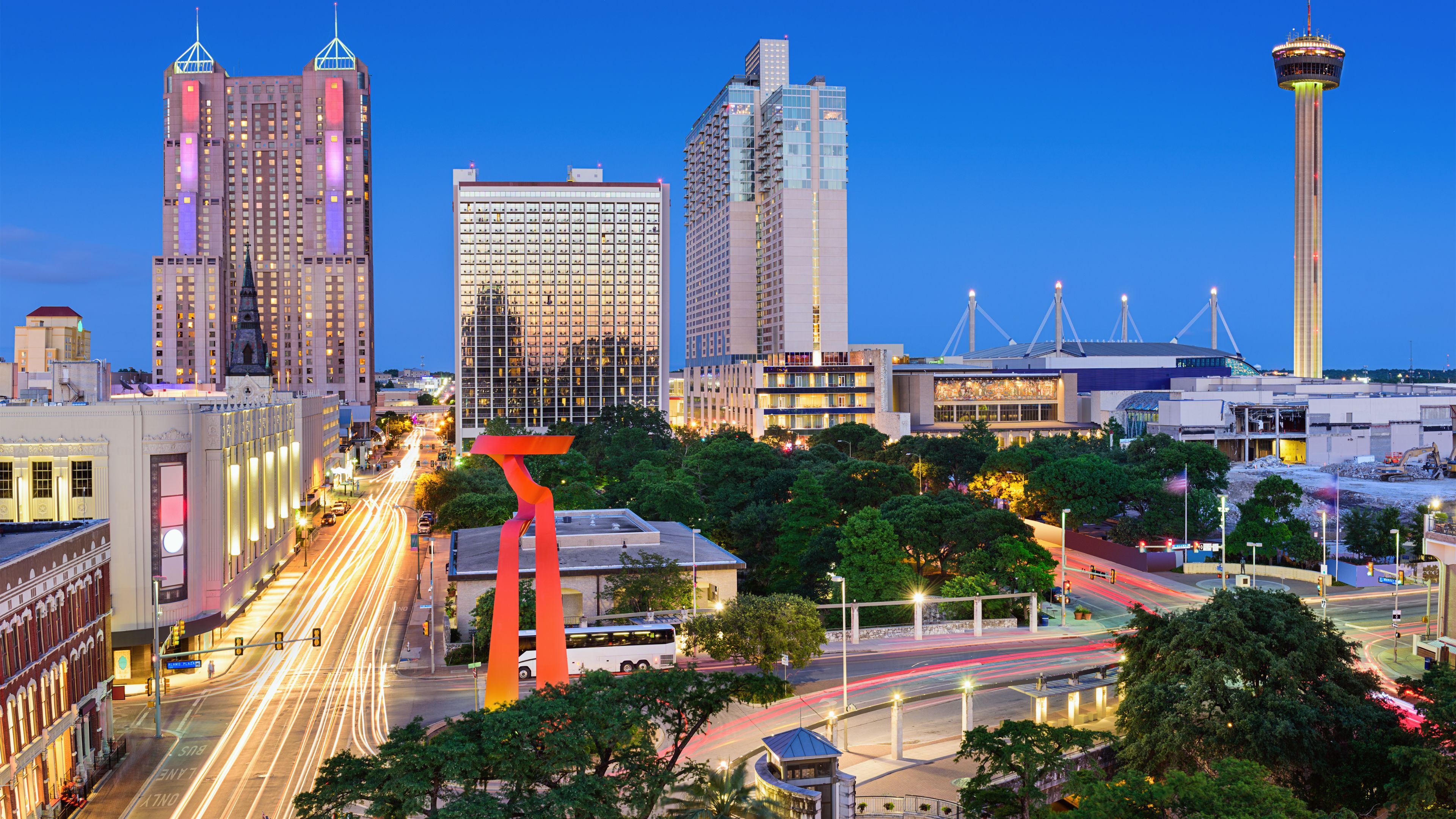
When driving through America, you can get confused by different state laws and how the rules change between states and even between cities and counties. That’s why we’ve created this handy guide for driving and parking in San Antonio, the oldest municipality in Texas. It’s steeped in rich Spanish and Mexican history and we’re sure you’ll agree that it’s a great place to drive around, see the sights and explore.
At-a-glance info:
Size of San Antonio in square miles | Total length of roads (in miles) | Longest road |
504.6m2 | 8,163 miles | Houston Street
|
Driving rules in San Antonio
There are a few key facts and rules to know about driving and parking in San Antonio. These include:
- Right of way: when driving in San Antonio, you must yield to pedestrians and emergency services. When on the freeway or highway, you should keep right and only move into the left lane for passing vehicles. Once you’ve passed the vehicle, move back into the right lane when safe to do so.
- When to signal: you should signal whenever you’re turning in to and out of an intersection and when passing other cars in the left lane. This is so other drivers are aware of your intentions to turn.
- Headlights: as in most places in the United States, your headlights should be turned on within half an hour before sunset and can be turned off 30 minutes before sunrise. They should also be used if visibility is less than 1,000 feet in bad weather like fog, snow or rain.
- Cell phone use: using a handheld device in your vehicle when driving is prohibited. You cannot send or receive electronic messages while driving. If you have Bluetooth connected, you can receive calls, but you should be aware of your surroundings. When traveling through a school zone, you should not use any handheld devices for any reason.
Speed limits in San Antonio
It’s important that you’re aware of San Antonio speed limits so that you can avoid fines and prevent dangerous driving. Here’s a breakdown of the speed limits you’ll need to know in and around the city:
| Cars | Trucks |
Residential roads | 30mph | 30mph |
Urban highways | 30mph | 30mph |
Rural highways | 70mph | 70mph |
School zones | 30mph | 30mph |
Business districts | 30mph | 30mph |
San Antonio Toll roads
Currently, there aren’t any San Antonio toll roads, but they have been proposed multiple times. They may be created in the future, where new lanes have to be built due to state laws so watch this space. We’ll update you if any changes happen in relation to toll roads.
There are toll roads near San Antonio – the Texas State Highway 130 runs from outside of San Antonio to Georgetown. The toll price starts at $1.29 for those without a TxTag (the tag for Texan Toll roads, it takes payment automatically) to $9.10 for 18-wheelers or trucks with two trailers. You can pay via mail if you don’t want to get a TxTag, especially if you’re a tourist or only traveling through Texas for business. You can also pay online at the State Highway website.
Parking in San Antonio
It’s easy to find parking in San Antonio as there’s plenty of parking lots and spaces. Here’s a few to check out if you’re looking for parking in the city:
Comal Street Parking Garage
Right in the center of San Antonio, this parking lot is easy to get to and is ideal for visiting the River Walk and Downtown. Within walking distance of the San Antonio Museum of Art and the Alamo, you’ll enjoy being close to the heart of the city.
Location: 15 N Comal Street, San Antonio, TX 78207
Cost (per hour or per day): 0-30 minutes: $3.00. Between 31 minutes and 2 hours: up to $8.00. 2–24 hours: $10.
How to pay: Payments can be made by cash or debit or credit card at the ticket booth or the Express Pay ticket kiosks located by the elevators.
St Mary’s Street Garage
In Downtown, this parking lot is great if you’ve got children as it’s underground, so the car won’t get too hot – something you need to think about in Texas. Take advantage of Downtown Tuesdays where parking is free after 5pm due to a new initiative to get businesses more custom during the week.
Location: 400 N St Marys, San Antonio, TX 78205
Cost (per hour or per day): $10 flat rate for weekdays. $5 flat rate weeknights & weekends. Free parking on Tuesday after 5pm.
How to pay: Payments can be made by cash or debit or credit card at the ticket booth or the Express Pay ticket kiosks located by the elevators.
Parking Garage at Pearl
Located right in the Pearl, this is our favorite place to park for a full day of exploring the Pearl District, grabbing a bite to eat or taking in the sights of this beautiful neighborhood.
Location: 2102 Emma Koehler, San Antonio, TX 78215
Cost (per hour or per day): First two hours free. 2-5 hours: $10. 5-24 hours: $20
How to pay: Payments can be made by cash or debit or credit card at the ticket booths located at the parking garage entrance.
Street parking in San Antonio
As well as multiple parking lots throughout San Antonio, you can also park on the street. It’s metered until after 6pm on Monday, Wednesday, Thursday, Friday and Saturday. On Tuesdays, you can also use city-operated parking garages, parking lots and meters for free from 5pm to 2am.
San Antonio parking app
For even easier parking when you’re on the go in the city, there’s SAPark – the app for San Antonio parking. You can pay, extend and easily manage your parking sessions all from your mobile phone. Download it before you head into the city, put in your vehicle details and payment information and look out for signs for it when parking.
There’ll be notices on the parking lot you’re using informing you of whether SAPark is used there – take a note of the zone, enter your session length and pay. It’s easy to use and you’ll get an alert about your parking when it’s due to expire, providing you with the option of extending the session easily from your phone.
Electric car charging in San Antonio
San Antonio has really embraced electric vehicles and it can be seen in just how many electric charging points there are all over the city. There are currently 232 public charging stations. 87% of the ports are level 2 charging at 202 stations, 13% are level 3.
Over 130 of these stations are completely free to use. This has been a big initiative for the San Antonio government and there are more planned for the future. Use the ChargePoint or Tesla Apps for charging depending on your car and there are some places where you can just turn up and pay on the port using your card, Apple Pay or Google Pay.
Quick driving tips for San Antonio
It’s good to have some idea of how to drive in San Antonio day-to-day, especially during times like rush hour, bad weather and dealing with the various loops that crisscross the city. Here are five of our best tips for driving around the city.
- In bad weather, don’t drive through puddles in the road – it sounds obvious, but you’d be surprised how many people get stuck! With San Antonio being built on a large rock, the low-lying areas often get flooded, including exit ramps and lower lying roads. Find an alternative route or stay in the hotel – the water will recede quickly enough, it’s better than getting stuck.
- There are loop roads all over San Antonio and it can get confusing unless you have a decent SatNav in your car or you’re using maps on your phone.
- Rush hour traffic in San Antonio is nowhere near as bad as other large cities. There’s plenty of frontage roads and surface streets which are great to use as shortcuts over the city, so it’s easy to get around even in rush hour. Rush hour on the highways and loop roads normally happens between 7am and 9am and again between 4pm and 6pm. Midweek traffic, Tuesday to Thursday, is often the worst so bear that in mind.
- What is a frontage road? A frontage road runs parallel to the main highway and serves as an access road for businesses along the highway. It also acts as a conduit for cars exiting and entering the highway. Take frontage roads if traffic is beginning to back up, it’s often the fastest option. Use turnarounds – most frontage roads are one-way so, at most major intersections, there’ll be a lane specifically for U-turns where you can turn around and go in the opposite direction. Perfect if you’ve missed a turn or you need to head back on yourself for any reason.
Frequently asked questions
What is the best time of day to drive in San Antonio?
To avoid rush hour, your best time to drive throughout San Antonio is before 7am, after 6pm or between 10am and 2pm.
Is driving difficult in San Antonio?
It isn’t difficult to drive around San Antonio, but some may find the loop roads confusing.
How much is a speeding ticket in San Antonio?
If you’re double parked, you can expect to pay a $35 fine and court costs. If you’re blocking a street or driveway, you can expect to pay $35, and for parking within 15’ of a fire hydrant you can pay around $95.
We hope you enjoy your trip to sunny San Antonio and that you find driving in the area as easy as ABC. There are quirks to driving around this city but we’re confident that after a few days, you’ll be driving like a local and getting used to the loop roads and the other unique features of the city.
Get ready for your trip to San Antonio
When traveling to San Antonio, you’ll want to find out where the best places to stay are, where to eat and where to go. We want you to have the very best of experiences which is why we’ve put together the following guides to help you get the perfect trip planned before you go.
Related Articles
Idaho driving guide
Get started on your trip through Idaho with a variety of tips and guidelines on driving rules in the Gem state. From speed limits to child safety requirements and toll roads, Hertz has got you covered with this comprehensive driving guide.

Nebraska driving guide
Planning on driving in Nebraska? Discover the rules of the road, including toll roads and the speed limit in Nebraska. Find out more with Hertz.
Alaska driving guide
Thinking of driving in Alaska? It’s important to know the rules of the road. Find out more about the toll roads and speed limits in Alaska with Hertz.
