


Become a Hertz Gold+ Rewards member


10/03/2023 • 6 min
Guide to Electric Vehicles in Tennessee
Find out how the electric car rollout is advancing in Tennessee, from ownership stats to incentives, tax credit and charging stations. Read more with Hertz.
How fast are electric cars taking off in Tennessee? Read this Hertz guide to electric car usage, from ownership statistics to incentives and charging stations.
Musical and mountainous Tennessee – the Southern state famed as the birthplace of country and blues – might not be the first place you think of when we mention electric cars. But driving an electric vehicle (EV) in Tennessee is getting easier all the time.
With more than 22,000 all-electric cars on the Volunteer State’s roads, it’s clear the EV revolution isn’t passing Tennessee by.
In fact, Tennessee has the 22nd most electric cars, placing it in the top half nationally for electric car usage.
The state is also taking on a key role in manufacturing. In October 2020, General Motors announced a $2 billion investment package for a plant in Tennessee. A further $2.3 billion was pledged for a battery manufacturing site in April 2021.
The state looks set to sit at the heart of America’s sustainable motoring revolution. So, is it a good time to try out an electric car for yourself?
Below, we’ll explore the state of electric cars in Tennessee, including incentives, tax credit, changing laws and how to find a charging station.
You’ll read about:
- How many EVs there are in Tennessee
- Incentives for EVs in Tennessee
- EV registration, licensing and fees in Tennessee
- The Tennessee electric car charging network

How Many EVs Are There in Tennessee?
EV ownership in Tennessee at-a-glance:
- 22,040 electric vehicles (EVs) were registered in Tennessee as of December 31, 2022.
- Of the 2.35 million cars registered in Tennessee in 2021, 0.9% were electric .
- Electric car ownership grew by 50% between 2020 and 2021. Just 11,034 EVs were registered in Tennessee at the end of 2020 – so growth is rapid.
Tennessee’s contribution to the national EV landscape:
- The state ranks 22nd nationally for electric car ownership.
- Tennessee is now the 15th most-populous state , so electric car usage lags when compared to the number of people.
- Of the 2,442,270 electric cars in the USA in 2022, 0.9% were registered in Tennessee.
Electric car laws, regulations and plans in Tennessee:
- Tennessee is a non-ZEV (Zero Emissions Vehicles Program) state, meaning it isn’t one of the 13 states pledging to phase out new gasoline cars by 2035.
- Tennessee has signed up to National Electric Veicle Infrastructure (NEVI) planning, so we can expect plans for charging station updates annually. As such, driving an electric car in Tennessee could get a lot easier in the coming years.
- Drive Electric Tennessee wants to see 200,000 plug-in cars on Tennessee’s roads by 2028 .

Are There Incentives for Electric Cars in Tennessee?
Though there are few state-level electric car incentives in Tennessee, residents can enjoy the benefits of federal incentives, and those that come via utility providers.
There are:
- Savings on at-home solar systems and home electric car chargers via Tennessee-based utility companies. For instance, the Knoxville Utility Board (KUB) offers $400 towards the installation of a home charger.
- Law details designed to favor electric cars in Tennessee. Natural Gas Vehicles (NGVs) and Electric Vehicles (EVs) can both surpass the typical interstate weight limits in Tennessee by 2,000 pounds.
However, there is no electric car tax credit system in Tennessee, and no EV tax rebates either.
When it comes to federal incentives, you can get:
- Tax Credit on Commercial Electric Vehicles and Fuel Cell Electric Vehicles. Certain car models could get you 30% off the price tag.
- Tax Credit on Electric Vehicles and Fuel Cell Electric Vehicles. In some instances, you could get $7,500 towards an EV.
Tax Credit on Pre-Owned Electric Vehicles and Fuel Cell Electric Vehicles (FCEVs). This could be worth up to $4,000 towards a used electric car.

EV Registration, Licensing, and Fees in Tennessee
There is an extra $100 annual fee to register an electric car in Tennessee . This takes the registration fee up to $123.75.
The extra fee is set to rise to $200 in 2024. In 2026, the additional fee for electric cars is due to rise again to $274.
There’s also an excise tax on all cars, which includes a title fee paid directly to the Tennessee Department of Transportation. This might be a different process to those you’ve seen in other states.
You might find you need to find specialist insurance for electric cars in Tennessee, which can sometimes cost more than for gasoline cars.
Tennessee EV charging network
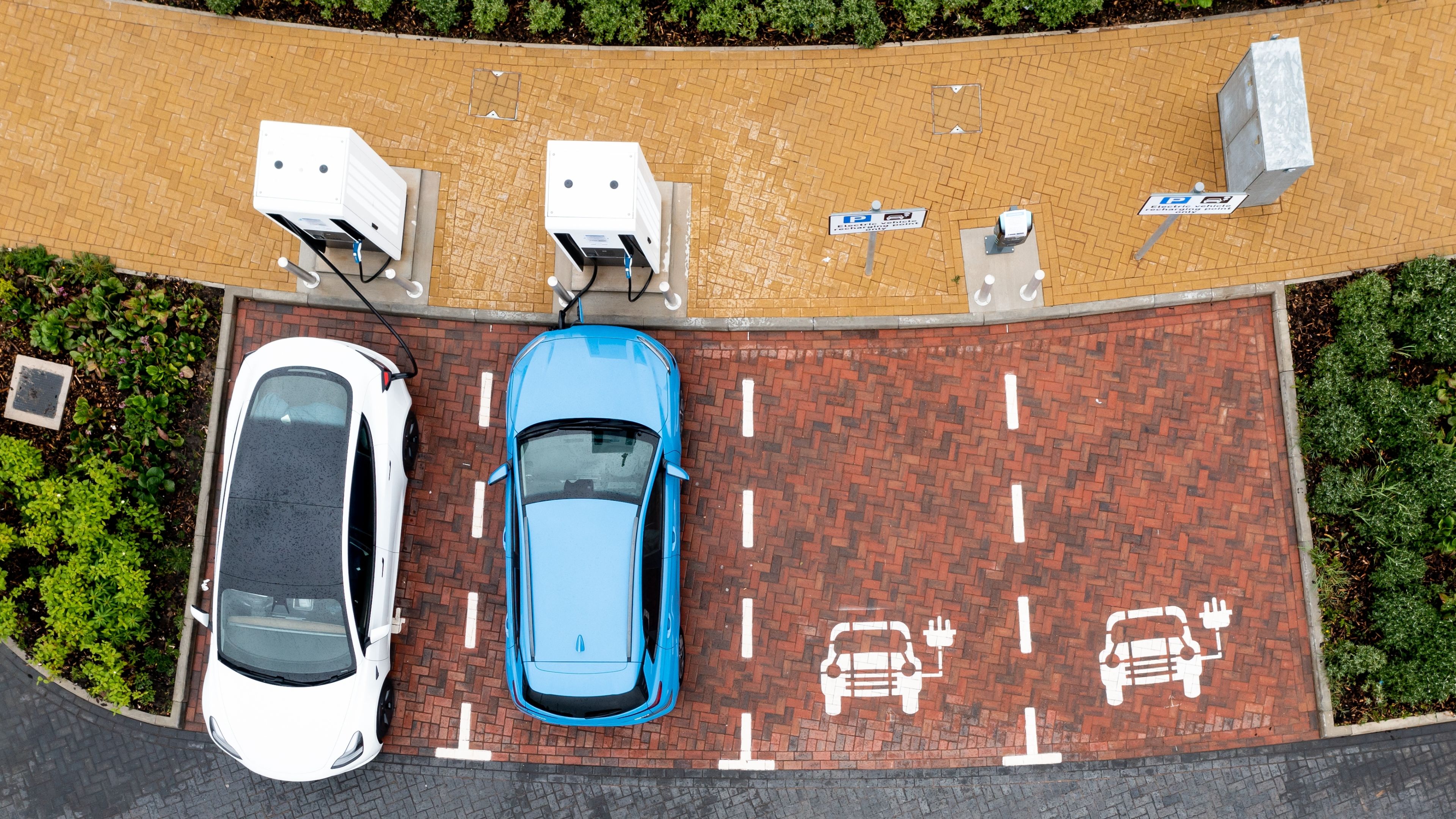
The Tennessee Valley Authority (TVA) and Tennessee Department of Environment and Conservation (TDEC) have agreed to fund a network of electric car charging stations every 50 miles along major highways. This should mean Tennessee’s EV charging network grows considerably in the coming years, making charging when out and about more readily available.
As of March 2023, though, only 25 accessible fast charging points operate in Tennessee.
These can be found in Memphis, Jackson, Martin, Chattanooga and in some rural zones, such as at Cherokee Lake. A handful of electric car charging stations surround Knoxville, and Nashville has chargers both downtown and in the suburbs .
Despite the current sparsity of high-speed chargers, there are hundreds more low-speed EV charge points in Tennessee. So if you need to charge up and have a little time to spare, you should have no problem.
Costs vary, but you might expect to spend between 30 and 40 cents for each kWh when you charge an electric car in Tennessee. In practice, this could mean it costs you $8 to fully charge your car, or $40 .
There is also help available to install your own at-home charger in parts of Tennessee.
For instance:
- The Knoxville Utility Board (KUB) offers a rebate on home EV chargers and installation costs. You need to be a residential customer with KUB for your electricity to be eligible .
- Middle Tennessee Electric provides customers with $50 in credit to help with the cost of setting up a home EV charger.
All in all, it’s an interesting time for electric cars in Tennessee. On one hand, the state is set to become the nation’s EV manufacturing powerhouse. With this come plans to improve infrastructure dramatically. It’s no surprise EV ownership is growing at such a fast rate in Tennessee. On the other, there are fewer incentives than other states, making the cost of going electric slightly higher.
Even so, with so many batteries and chargers due to find a home in the state, it’s likely Tennesseans won’t want to miss out on the benefits themselves.
For more guides and info on the world of electric vehicles, check out our EV blog.
Related Articles
Do I Need to Return an EV Rental With a Full Charge?
Hertz offers three great options options to recharge your rental EV. Read about them below.

Venture into Nashville’s neighborhoods
Discover the best Nashville neighborhoods to visit in this Hertz guide. Read on to find out the city’s most iconic areas, attractions, eateries and stores.

Best things to do in Nashville
Planning a trip to Nashville? You’ve come to the right place. Prepare for an epic adventure in Music City with our guide to fun things to do in Nashville.


