
Spa-Francorchamps History
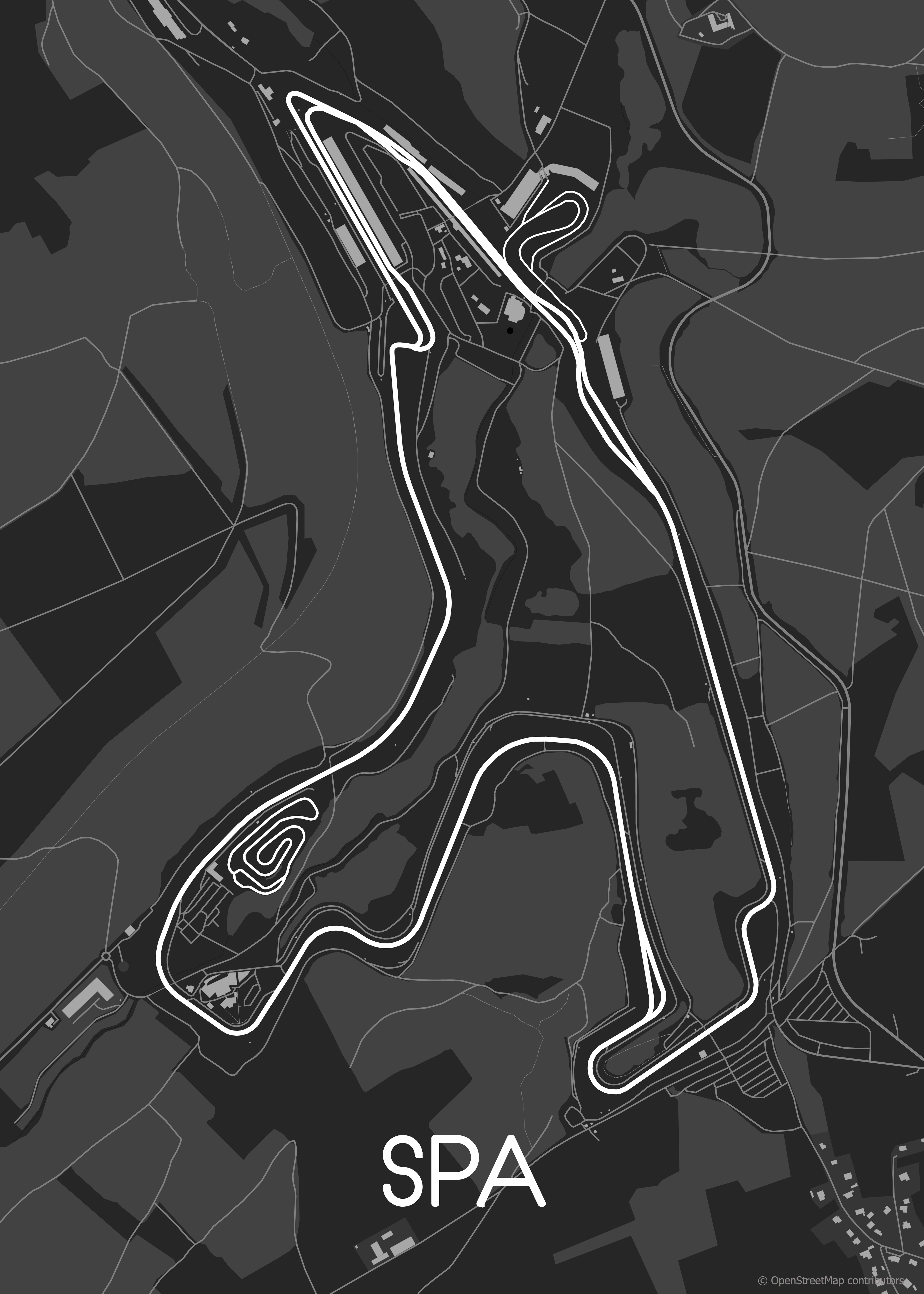
A History of Spa-Francorchamps
Recognized by many as one of the most beautiful tracks in the world, Spa-Francorchamps is a favorite fixture of many motorsport calendars. It’s a racetrack and a tourist attraction in one. If you’re interested in learning more about the history of this iconic Belgian circuit, get yourself strapped in as we fill you in on its twists and turns over the years.
Where is Spa-Francorchamps?
The Spa-Francorchamps circuit is situated in the heart of the Ardennes region, surrounded by breathtaking natural scenery. The gorgeous green landscape makes this setting so much more than just a racetrack – it’s a thrilling natural spectacle to boot.
You’ll find the track located near to the picturesque Fagnes mountains. This means visitors to the circuit get a wonderful view of the rolling hills and forests, as well as witness all the action at the track first-hand.
How Old is Spa-Francorchamps?
The original Spa-Francorchamps racetrack was built in 1921. It was triangle-shaped and created by designers Jules de Thier and Henri Langlois van Ophem. They used public roads between Francorchamps, Malmedy, and Stavelot to create a 14.9km circuit that incorporated the surrounding countryside
The circuit has of course undergone further construction since its original layout. Here’s an outline of the different stages of Spa-Francorchamps over the years:
1930s
A road that bypassed the Virage de Ancienne Douare was built on the track in 1939. This created the infamous Eau Rouge/Radillon uphill corner sequence.
1940s
Damage was caused to the circuit by World War Two as the Battle of the Bulge took place at the Ardennes. In 1947, Spa-Francorchamps was back up and running with a different layout – a sweeping corner was created at Stavelot to avoid the town.
1970s
After a series of tragic accidents and fatalities, safety measures were implemented to the track in 1979 to make it a safer location to race. An additional portion of track was created between Les Combes and Blanchimont, making the overall circuit four miles long. This increased marshal coverage and removed the long straights that made drivers reach such perilous high speeds. This is the most significant change that has occurred in Spa's history.
1980s
In 1981, the bus stop chicane between Blanchimont and La Source was added to further slow cars down.
1990s
After the unfortunate death of Ayrton Senna in 1994, a series of changes were made to the racetrack, including a slow chicane at Eau Rouge where Alex Zanardi crashed the year prior. This was then removed in 1995, and additional run-off areas were added instead.
2000s
In 2000, Spa-Francorchamps became semi-permanent, with traffic banned between March and October. It then became fully permanent shortly after. In 2006, more modifications and upgrades were made, and in 2007 new pit facilities were built. These cost €15 million in total and brought the circuit in line with the current FIA standards. Further tweaks were also made to the bus stop chicane to create a double hairpin.
Memorable Spa-Francorchamps Races
15 years after his first win at the 6 Hours of Spa, Belgian legend Jacky Ickx surged home to victory in the 1983 edition in his iconic Porsche 956. While his victories in the next two races in the ’83 calendar secured him the overall driver’s championship, the win at Spa was his fifth overall – a tally matched only by Frenchman Sebastian Buemi in 2021, a full 28 years later.
