


Become a Hertz Gold+ member and unlock even more rewarding perks:

Hertz in Dijon
Elegant streets inspired by the Renaissance, gastronomical marvels and palaces filled with art and sculptures, Dijonis one of France's most beautiful cities.With its refined style and lively center, Dijon is the capital of the once-powerful Duchy of Burgundy, and the gateway to one of the country’s most famous wine-producing regions.
The city and surrounding area are best explored in a rental car. Of the pick-up locations, the most central is at the city’s main rail station, Gare de Dijon-Ville. There are no hidden extras to pay and no cancellation or amendment fees (when the reservation is changed or canceled up to two days before collection). Our best price guarantee means we’ll refund the difference in the unlikely event for find a lower Hertz price.
Driving in and around Dijon
Dijon has a good road system and it’s relatively easy to get around by car. Its streets are less congested than other French cities, and finding a parking space is rarely a problem.
There are many parking lots around the main city center. There’s an underground parking lot on Place Grangier, which is convenient for the famous Les Halles market and the rest of this historic district. There’s also one on Rue Auguste Comte, which is close to the Musée des Beaux-Arts and Church of Notre-Dame.
The city center is mostly encircled by the D905 along its northern and eastern fringes and by the D974 along its western edge. This inner ring road links to the N274, the main city bypass, which in turn connects to the A38 highway (autoroute) heading west towards the main A6 Paris-Lyon highway. It also connects you to the A39 heading south-east towards the Alps and Switzerland, if you feel like some Alpine air.
The French, like the rest of Continental Europe, drive on the right-hand side of the road. French highways are called autoroutes, prefixed with an ‘A’. Many are toll roads, which are marked by blue ‘péage’ road signs and you can pay with cash or card.
Speed limits are indicated in kilometers per hour, and on autoroutes are 130km/h (81mph) in the dry or 110km/h (68mph) when wet. N roads are two-lane freeways and are indicated by green road signs with a speed limit up to 110km/h (68mph). The speed limit on main single-lane roads can differ, and may be 80km/h (50mph) or 90km/h (55mph), dropping to 50km/h (31mph) in built-up areas, and sometimes lower.
Lane discipline is strict in France. You have to pull into the inside lane when there is space. When buying fuel (known as ‘essence’), ‘sans plomb’ is unleaded petrol and ‘gazole’ is diesel.
A quick guide to Dijon
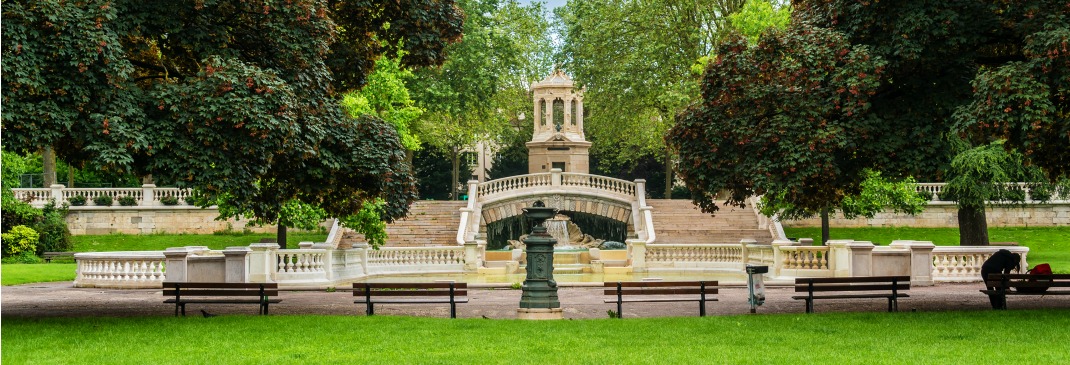
Everyone knows Dijon for its iconic mustard, but there’s so much more to this ancient town than this fiery condiment. Its graceful streets are a delight to wander around, its cuisine is second to none, and the city is surrounded by one of France’s great wine regions.
See the best of art in a ducal palace
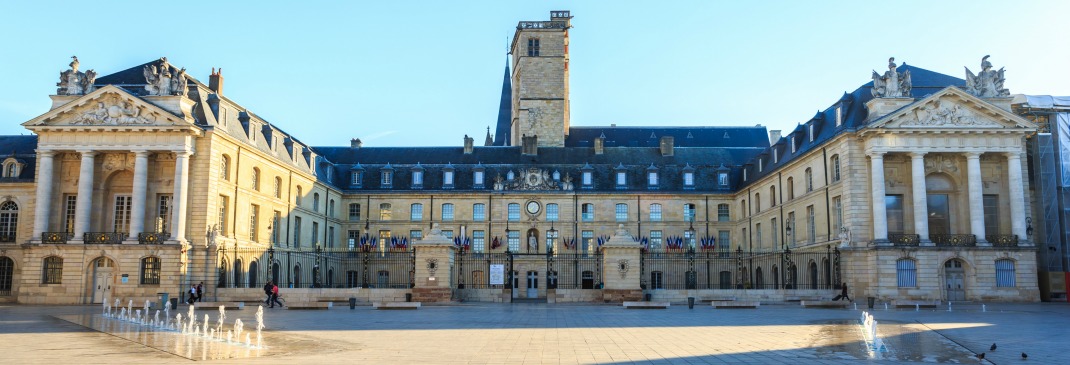
One of the city’s main draws is the imposing Palace of the Dukes (Palais des Ducs), originally built by the Romans, but later rebuilt in 1366. It was remodeled again in the 17thcentury by the same architects who designed the Palace of Versailles, and the similarities are obvious.
The palace is home to theMusée des Beaux-Arts, one of France’s oldest and most beautiful museums. Inside you’ll find Oriental porcelain, Ancient Egyptian antiques and Roman art, as well as paintings by greats such as Titian, Rubens, Monet, Manet, and Sisley.
Explore Burgundy’s towns, villages and vineyards
Just a 40-minute drive south from Dijon, Beaune is ripe with old, wooden-framed and beautiful architecture. A must-see is the Hospices de Beaune. This hospital foundation-turned museum was established in the Middle Ages, and today also has 50 hectares of vineyards.
If you’re on an art and history hunt, Autun is about an hour-and-a-half’s drive south-west of Dijon. Emperor Augustus ruled here 2,000 years ago and you can see still see Roman relics and ruins, like the Temple of Janus (Janus being the Roman god for gates, beginnings and more), and what remains of the original amphitheater.
Meet the lucky owl
Close to Dijon’s Musée des Beaux-Arts is the church of Notre Dame. Built between 1230 and 1250CE, its facade is decorated with sinister gargoyles representing the struggle between good and evil. Inside, the 11th - century wooden statue of the Virgin Mary – one of the oldest in France – is said by locals to work miracles.
Look out too for the 14th - century mechanical clock, Jacquemart, which chimes every quarter of an hour. Outside, on the north wall, touch La Chouette – a stone carving of an owl – and make a wish, like other visitors have done for centuries.
Sample the best of French food
Few markets are as large or beautiful as Les Halles – and that’s saying something in France. Dijon’s main covered marketplace, it was designed by the city’s own Gustave Eiffel – designer of the Eiffel Tower in Paris.
If you’re here on a Tuesday, Friday or Saturday morning, spend a few hours wandering though the stalls that overflow with fresh seasonal fruit and vegetables, traditional cheeses, fish, flowers, and spices, as well as local delights such as jambon persille (ham terrine with parsley) or, if you’re feeling adventurous, the local snail terrine.
The Burgundy region is famed for its wonderful cuisine and is home to such classic French dishes as coq au vin, beef bourguignon and snails (escargots). The city is peppered with fine restaurants but for something a bit special, head for La Dame d’Aquitaine, where, you can sample the very best of local cuisine in the atmospheric surroundings of a 13th-century Gothic crypt. A particular specialty is the Burgundy rabbit with kidneys and mustard sauce.
With a rental car from Hertz, you can explore everything Dijon and Burgundy have to offer.