
A Day in the Life of a Pit Crew
Rev your engines for another exciting year of the World Endurance Championships (WEC). Endurance racing isn’t just about the cars, it’s also about teamwork, dedication and pinpoint precision from all members of the crew. From the stamina of the drivers to the all-important coordination and comradery of the team, everything must run like clockwork to succeed.
Whether it’s a grueling 24 hours at Le Mans or the 12 tough hours of Sebring, the pit crew must always be ready to adapt their team’s hypercar to the changing conditions. As Hertz proudly partners up with Team JOTA for this year’s WEC races, let’s take a look at what goes on as a member of the pit crew.
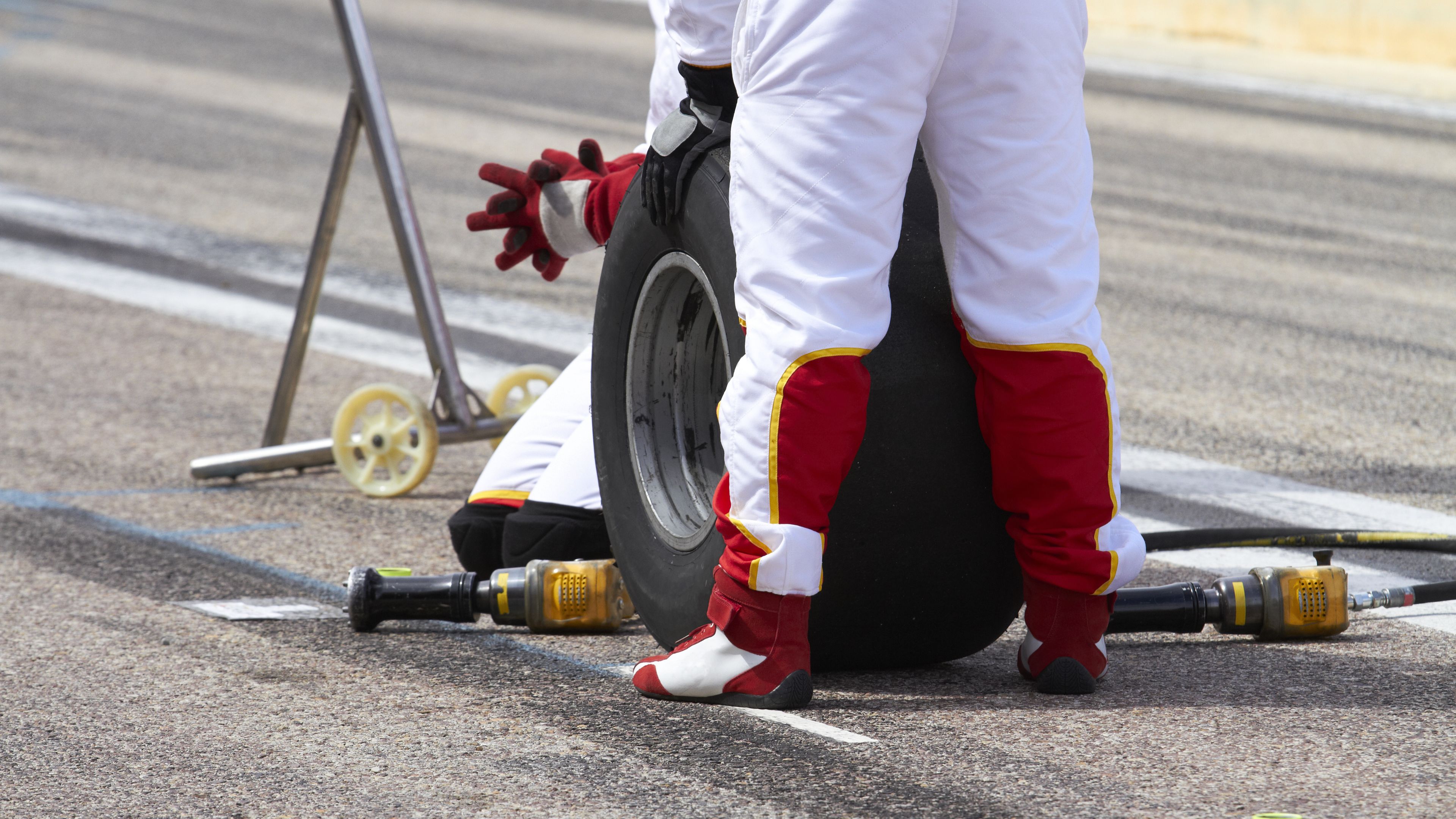
Do Pit Crews Prepare in Advance for a Race?
Think Le Mans only lasts 24 hours? Think again! Pre-planning is everything. Teams often arrive at the race circuit up to two weeks before the actual race. During this time, racing teams tweak their hypercars and drivers complete practice and qualifying laps in the run-up to the final race event. If crews fail to create a plan as precise as the car’s engineering, that prestigious win on the WEC calendar will remain just a dream.
Race Strategy
Some teams have remarked that planning a strategy for next year’s race starts as early as the Monday following the last race. Deep analysis of what went well, what could be improved and how to prepare for every eventuality are all factored in during the development of a race strategy.
Each member of the pit crew must be prepared to tackle numerous scenarios and remain alert around the clock. Race team strategists work alongside pit crews to ensure optimal performance in every situation. Time will be carved out for scheduled refueling, tire changes and other general maintenance. A proactive strategy is essential for managing unforeseen circumstances.
Pit Stop Practice
It may be cliché, but practice definitely makes perfect for pit crews. From dealing with planned fuel stops to fixing unplanned mechanical failures, every second counts. So, ruthlessly practicing a coordinated approach to rapid tire changes, refueling stops and other mechanical adjustments is a no-brainer. Consistent practice gives pit crews the upper edge in endurance racing and shaving seconds or even milliseconds from each action can edge a team closer to that prestigious win.
Equipment and Supplies
As the saying goes, “a workman is only as good as their tools”. Whether you’re building a shelf on the weekend or swapping red-hot brake disks out for new ones, having the best equipment makes a world of difference.
The tools will be arranged in a specific order, enabling the pit crew to access them swiftly during the race. In addition to their primary duties, the entire pit crew will be responsible for ensuring that all equipment is well-maintained and in optimal working condition, prepared for the upcoming pit stops.
How Do Pit Crews Communicate?
Effective communication is paramount among the pit crew and wider racing team. All members of the pit crew are assigned specific roles so that everything runs as smoothly as possible.
Pre-Race Briefing
Just as in any sport, team briefings play a crucial role in shaping the strategy. The race director will conduct an in-depth pre-race briefing, outlining the strategic approach for the drivers, engineers, and pit crew. This will normally involve discussions on potential weather for the race, when to pit the car, and what the drivers should look to do at different stages of the race.
Role Assignments:
You might get bored of hearing it, but the quote “races are won and lost in the pits” definitely rings true. With cars completing over 300 laps at races like Le Mans, individual performance is crucial for pit-stop crews to operate effectively. FIA WEC rules state that a maximum of eleven people can be included in the pit crew:
- Car controller – this member of the pit crew is responsible for leading the whole team and informing them of any changes.
- Refueler – solely responsible for managing refueling stops. This can only be done when the car is stopped, and the engine is off.
- Fire extinguisher attendant – this crew member is always equipped with a fire extinguisher during refueling.
- Cut-off valve attendant – must be present during refueling and is responsible for operating the cut-off valve.
- Driver attendant/cockpit helper – this member oversees helping drivers enter and exit the cockpit or make any changes inside the cockpit.
- Mechanics – four mechanics are allowed in the pit crew. They are responsible for changing any mechanical aspects from tires to brake pads. Only two separate wheel guns can be used at a time, so mechanics need to communicate effectively.
- Technicians – two technicians are on-hand to check the condition of things like tires or brakes.
Does the Pit Crew Carry Out Car Inspections?
Aside from official inspections of the hypercars – known as ‘scrutineering’ – the pit crew will prepare and inspect the car before the race.
Technical Inspection
Ahead of the race, the pit crew will work alongside officials to ensure that a thorough inspection of all mechanical, electrical and physical components of the hypercar are carried out. Safety features are also checked at this point to ensure the car is compliant with Fédération Internationale de l'Automobile (FIA) regulations.
Set-up Adjustments
The car will be adjusted accordingly following driver feedback during qualifying and practice laps. Race engineers work alongside the pit crew and recommend any changes based on changing weather conditions. Every aspect of tire pressure, suspension and aerodynamics will be fine-tuned in order to establish a strong start to the race.
It’s crucial that the tires are suitable if the race begins following or during wet weather. Ahead of the 2023 Le Mans event, the FIA has lifted the ban on tire warmers due to safety concerns. However, this ban will be re-introduced for the 6 Hours of Monza race in July 2023.
Final Checks
The pit crew’s ready, the drivers are ready and the team is raring to go. All this careful planning and orchestration is now about to be put to the test. Before the action begins, time for a thorough wardrobe check.
Safety Procedures
It might get hot and sweaty under all that safety equipment, but strict safety protocols are in place for a good reason. Fire-resistant overalls, thick gloves and helmets are mandatory for all members of the pit crew.
Radio Check
When the driver is hurtling down the Mulsanne Straight, it’s crucial that the pit crew and race team can send and receive vital information. Whether the driver is acknowledging a scheduled pit stop or alerting the team to a bigger issue, communication is paramount. A quick mic check between the pit crew and drivers should do the trick before heading to the start line.
Let’s Go!
There’s now only one thing left to do – RACE! Discover the talented drivers who will be proudly representing Hertz Team JOTA on the circuit. Join us in cheering them on and witness the adrenaline-fueled action of the World Endurance Championships.
