
Nothing pushes motor racing to the limits like Endurance Racing. Adrenaline-fuelled high-speed action takes place over thousands of miles, pushing teams to the limits of human tolerance. With world-famous circuits like the 24hrs of Le Mans featured on the calendar, WEC is one of the jewels in the motor racing season.
For the 2023 FIA World Endurance Championship (WEC) season, Hertz is sponsoring Hertz Team JOTA as we work together to achieve racing success on the track. Though the drivers may be the most recognisable names in a WEC outfit, there’s so much more to a competing team. A WEC squad is made up of many individuals, all working together to chase race wins. Find out what the roles are in a WEC team and what each person does below.
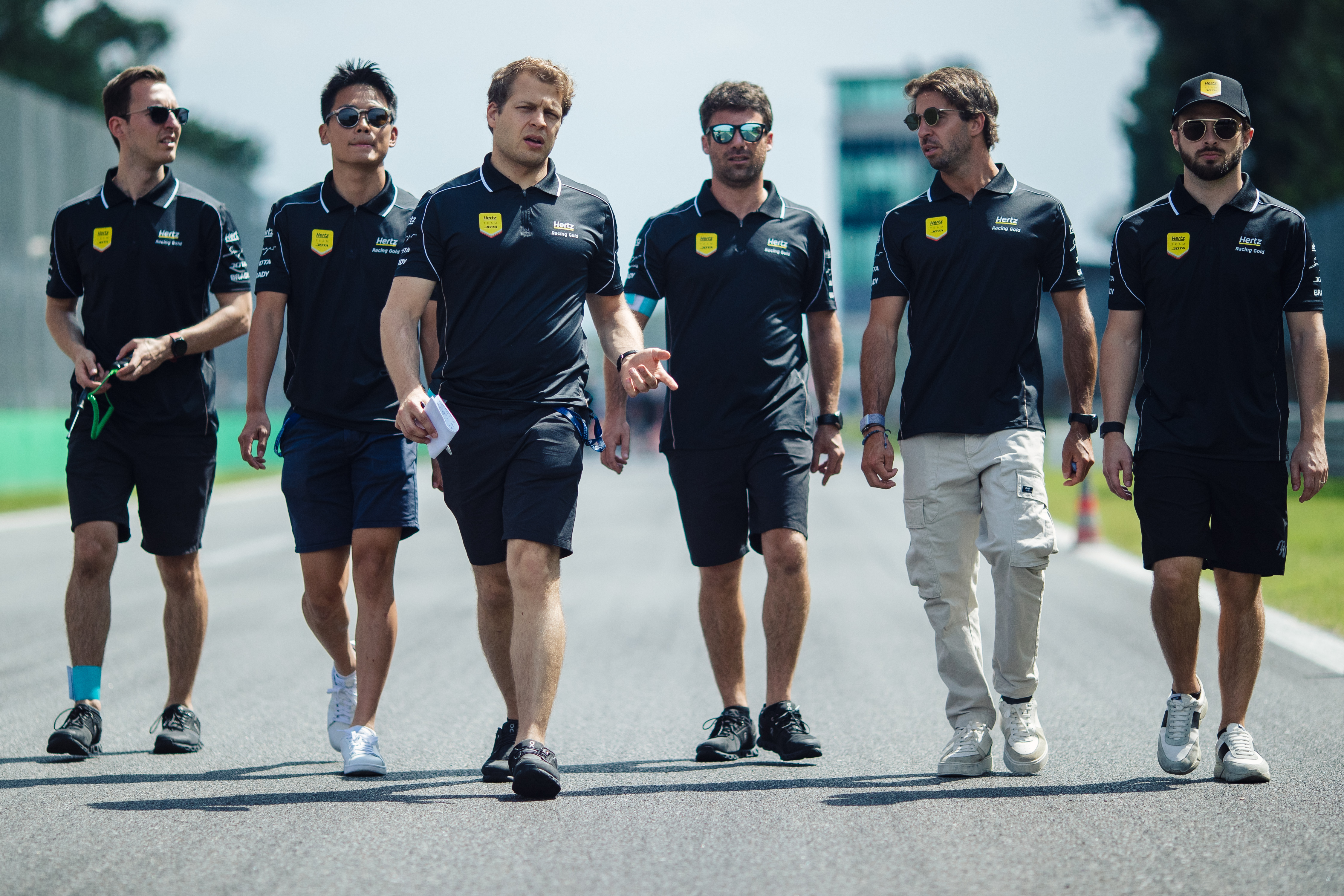
The head honcho of a WEC outfit, the Team Principal is the decision maker, leader and public face of the operation. They have an important role managing the team on and off the track.
The Principal’s role is a varied one. They’re tasked with overall oversight of an outfit’s operations, from budgets and sponsorship to race strategy and driver recruitment. Though a Team Principal will work with specialists in each area, final decisions come down to them.
The future success of a WEC outfit is reliant on the guidance, vision and skill of a strong Team Principal, whether that’s ensuring a steady revenue stream from big-brand sponsorship or signing up the best drivers in the field.
On race day, the Principal handles press and conducts interviews, while also working closely with their team to decide on an appropriate race strategy, making quick decisions throughout the race to counter opponent’s moves and changing weather.
The Race Engineer is the brains behind the team’s technical operation. It’s their job to fine-tune the car’s performance over a championship campaign. A car’s on-track achievements are down to the Race Engineer and their team.
An Engineer will pour over pre-race data and testing information to tweak a car’s setup, optimizing factors like suspension, tire pressure and fuel consumption. And, as the cars hit the track, the Engineer works closely with a Team Principal and the drivers to make strategic decisions throughout the race, like pitstops.
For the driver, the Race Engineer is their main point of contact with the wider team. It’s the Race Engineer’s job to communicate with the driver throughout the race via radio – discussing on-track performance, troubleshooting issues as they arise and informing the driver of on-track events or a change in strategy.
Effective communication and a calm head are vital to a Race Engineer to enable them to work closely with those around them during a high-octane race to ensure everyone competes safely and successfully.
The driver is the star of the show in any WEC team. Their on-track exploits and daring feats are what attract legions of fans to the motorsport. Good drivers win championships, and that is essential to the financial and strategic success of any WEC operation.
A WEC team usually consists of two to three drivers, each taking ‘stints’ in the car during a multi-hour endurance race. A driver has to be good behind the wheel, finding the right race and grip during changeable conditions on the track. As well as being able to drive fast, a skilled driver will also know how to defend a place, make a pass and manage fuel strategy to ensure a race goes well.
As important as bravery and fearlessness are, a good driver must be a team player. Drivers work together with the rest of the team to implement a race strategy and counter an opponent’s own moves and methods.
A pit crew usually consists of around 10-11 members. The team are responsible for working on the car during a pitstop. The aim is to have the car fitted with new tires and refuelled in seconds, so precision and efficiency are paramount.
A traditional pit crew [DMJ(S1] is made up of mechanics, each of whom has their own individual role. Roles include:
When it comes to race tactics – the chief Strategist is the top dog. Plans can go out of the window come race day, with changeable weather and conditions on the track.
A good strategist is essential to the team’s on-track performance. They’ll work closely with the Principal and Engineer to develop tactics for the day and attempt to outwit their rivals. Using live telemetry and testing data, the strategist alters plans as the laps go by, ensuring the team is getting the best from the car and adapting to changing circumstances to ensure optimum performance.
A team’s mechanics work behind the scenes to ensure each car is performing at an optimum level. The mechanic team, sometimes different to those few involved in the pit crew, work on a car before and after a race.
They are responsible for performing repairs and maintenance to ensure the vehicle is running safely and efficiently.
Good knowledge of technical repairs and the nous to fix problems as they arise are the most important tools in the mechanics' arsenal. The mechanic team needs to work quickly and efficiently under pressure to get the car ready for race day.
An army of support staff works behind the scenes, diligently beavering away to ensure the team’s overall success. There’s a wide manner of roles within the team that aren’t directly involved with what’s happening on track. Some of the wider team roles include:
Find out more about WEC racing and Hertz involvement in this year’s calendar by visiting our WEC hub.
