


01/10/2023 • 10 Minutes
How Do Electric Cars Work?
DRIVE ELECTRIC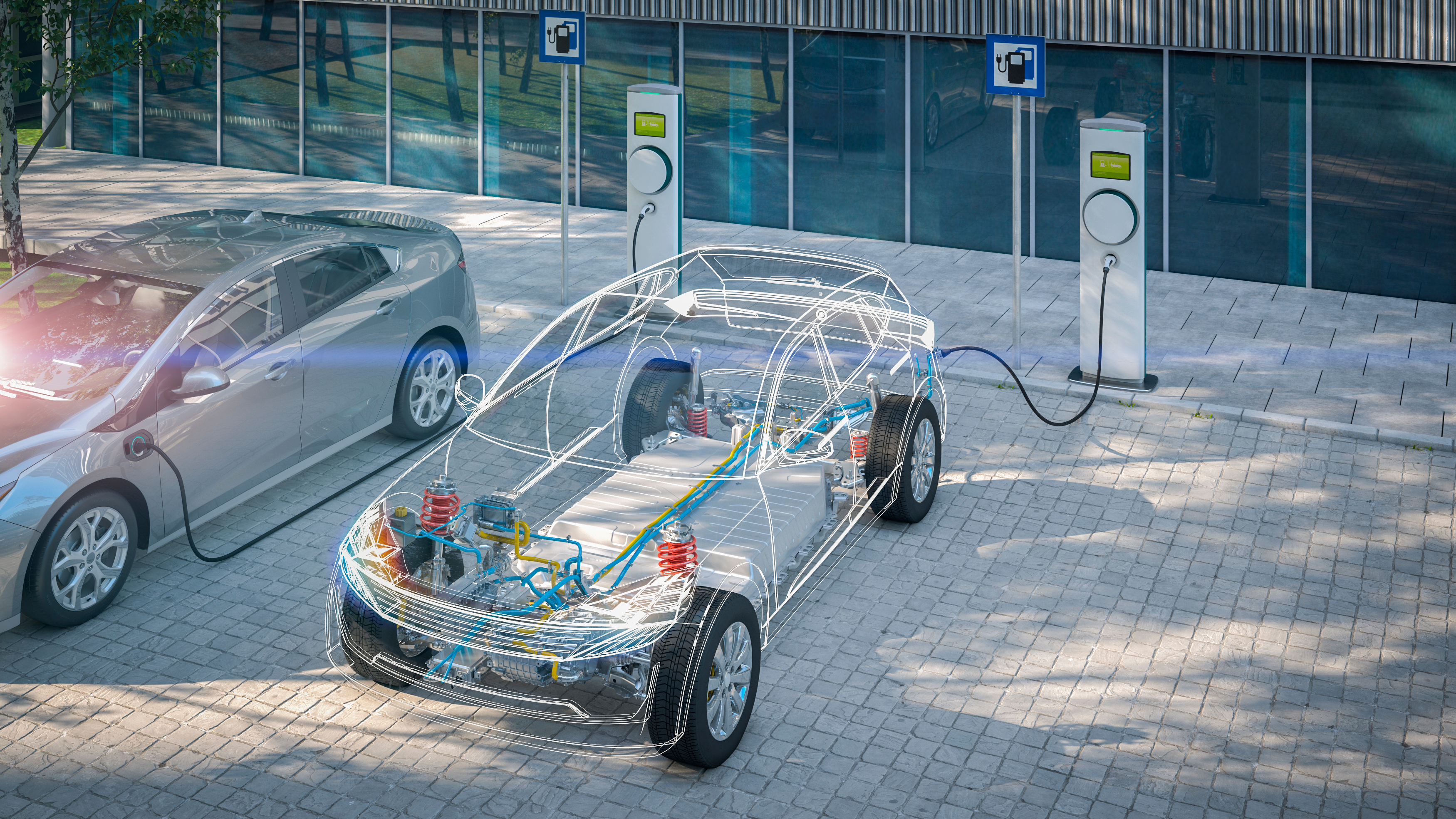
As people around the world increasingly move toward a more resource- and cost-efficient way of driving, the automotive landscape is shifting to reflect this demand. Major manufacturers, including Tesla, Ford, GM and VW, have responded by producing multiple types of electric vehicles. These innovative cars may resemble gas-powered cars from the outside, but what sets them apart is on the inside – specifically, how they work.
So how do electric cars work exactly? And how do they ensure zero emissions and more benefits for the environment? We’re taking you through the different types of electric cars available, the parts that make up these vehicles and how they’re powered.
Jump to a section:
- What are the different types of electric cars?
- What parts does an electric car have?
- How is an electric car powered?
- What are the environmental benefits of electric cars?
What are the different types of electric cars?
Battery Electric Vehicle (BEV)
A BEV, otherwise known as an all-electric car, is a vehicle which is solely powered by electric. An electric motor replaces the traditional combustion engine found in gas cars, using a rechargeable battery in place of a fuel tank.
A good charging point infrastructure in your local area, or a home charging point, is necessary in order to recharge the car battery. All-electric cars are usually very quiet, due to the lack of engine noise, and no exhaust system means there are zero exhaust fumes.
Hybrid Electric Vehicle (HEV)
A hybrid vehicle uses a combination of both electric technology and traditional fuel methods, featuring an electric battery and an internal combustion engine. The engine is fueled using gasoline, either unleaded or diesel, while the electric motor is charged using regenerative (regen) braking. Learn more about regen braking in our how to drive an electric car guide.
Hybrids offer better fuel economy and emit less CO2 than a traditional gas-powered car, but they don’t reach the zero emissions of an all-electric. However, they do feature stop and start technology for less engine idling.
Plug-in Hybrid Electric Vehicle (PHEV)
Plug-in hybrids are similar to hybrid (HEV) vehicles but offer more range, as they have larger batteries, motors and can also be charged at a charging point. They mainly use electricity to drive but use fuel from the gas tank once the battery has run out of charge.
PHEVs provide the environmental benefits of an electric car, with the added assurance of a combustion engine if you can’t find a charging point. This can be ideal if you’re traveling in remote areas where charging stations may not be readily available. However, as we discuss in our how to charge an electric car guide, there are over 40,000 charging stations nationwide with more rapidly being installed.
What parts does an electric car have?
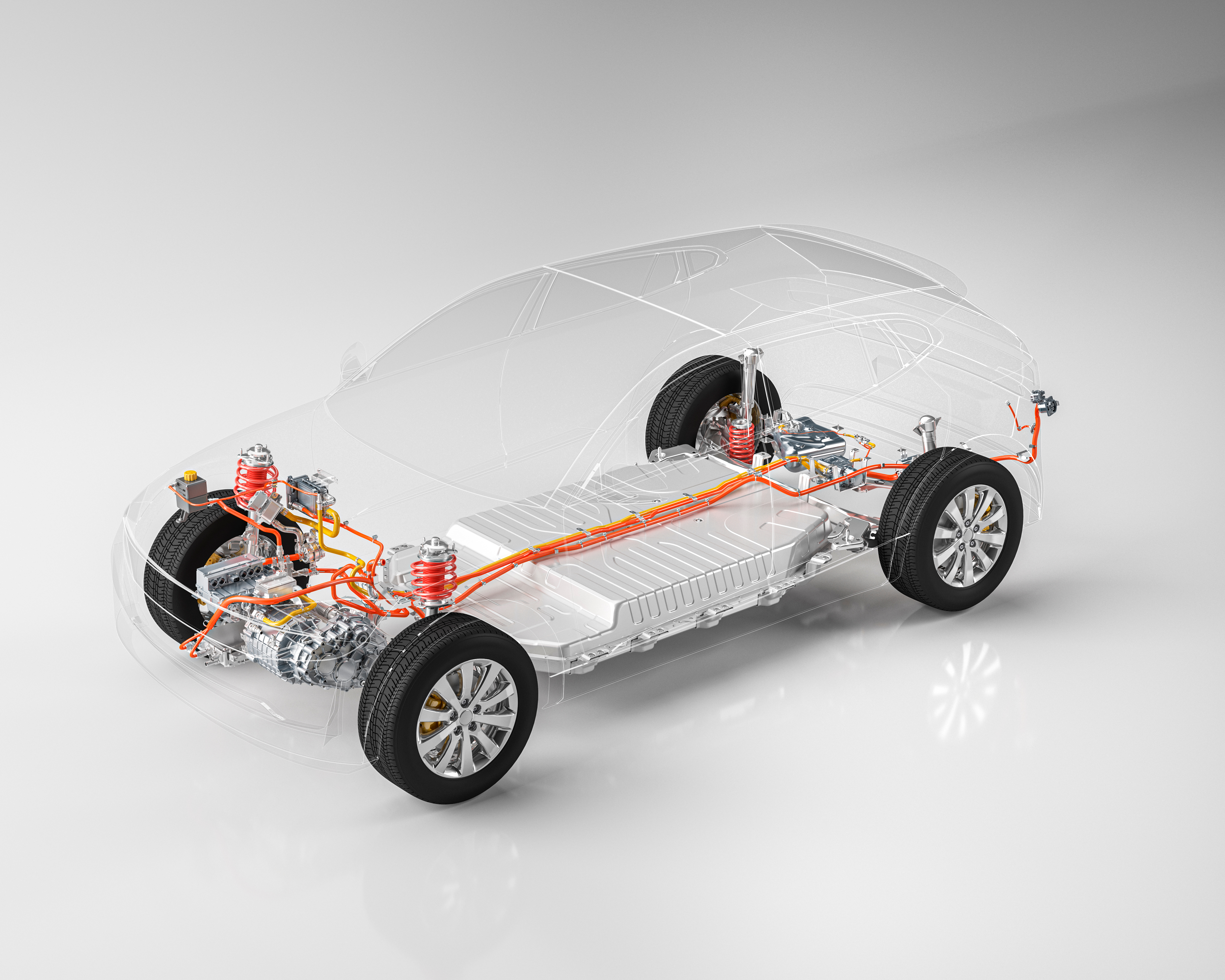
- Electric Motor – Takes energy from the battery or engine and delivers it to the wheels to rotate them. Some motors have regenerative functions which will charge the battery.
- Transmission – Takes power that is generated from the electric motor and transfers this to the wheels, driving and rotating them.
- Traction Battery Pack – This stores electricity that is generated and is then used by the electric motor to be delivered to the wheels.
- Auxiliary Battery – In a hybrid car, the auxiliary battery is used to start the car and power the vehicle and its onboard accessories. In an all-electric car, the battery solely provides electricity to the accessories.
- Converter – Converts high-voltage DC power from the traction battery pack to lower-voltage DC power for recharging the auxiliary battery, allowing use of accessories.
- Inverter – Inverts DC charge to AC charge for driving the electric motor. It then does the opposite for regenerative braking
- Generator – Generates electricity gained from the braking system and transfers it to the battery, to help power the vehicle.
- Power Electronics Controller – Manages the flow and power transfer between the battery and motor. This helps to manage the speed of the motor and torque produced.
- Onboard Charger – Converts AC power from an external charging station to recharge the battery. It also tracks battery voltage, current temperature and state of charge.
- Charging Port – Used to connect the car to an external power supply when recharging the battery.
How is an electric car powered?
The key to any electric car, whether it’s fully electric or hybrid, is battery power.
Most electric cars use an auxiliary battery for accessories like:
- Lights
- Dashboard
- Infotainment systems
In hybrid electric vehicles, the auxiliary battery is often also used to start the car. EVs have a second battery source that is strictly used for powering the electric motor – the traction battery pack.
Typically located along the floor pan of the vehicle due to its weight, the traction battery is made up of thousands of Lithium-ion cells. These produce electricity through chemical changes that happen when the battery is charging.
When electricity is being transferred from the battery, a control unit is used to calculate how much power to send to the electric motor. The motor then converts the energy into mechanical energy to move the wheels. As a comparison, combustion engines found in gas-powered cars convert to thermal energy instead by burning fuel.
In all-electric and hybrid vehicles, regenerative (regen) braking is also used to feed energy back into the battery by using an inverter to invert energy from the brakes. Regen braking uses torque to slow the vehicle, recapturing energy that is normally lost in non-electric cars.
Charging electric cars is done at a charging station, whether a home station or public location, and is the way they remain powered. Once connected to the charging station, EVs use a charging port and onboard charger to convert the external power into battery charge. While BEVs must be repowered at a charging station, hybrid vehicles can be recharged at a charging station or refueled at a gas station.

What are the environmental benefits of electric cars?
There are many reasons why an electric car is the greener choice compared to gas-engine models. For starters, electric batteries last 10-20 years as opposed to shorter-life batteries in traditional cars, creating less waste. Electric cars also help to reduce emissions.
As gas-powered cars burn fuel to produce power, the gases from this process exit the vehicle through the exhaust system. These gases are harmful to the environment as they contain a number of pollutants, such as CO2.
All-electric vehicles (BEVs) use electricity instead of fossil fuels, resulting in zero emissions from the car. Hybrids (HEVs) and plug-in hybrids (PHEVs) still use fossil fuels alongside electricity, and though they have significantly lower emissions than solely gas-powered cars, they still produce some exhaust fumes.
To put it into perspective, replacing one gas-powered car on the road with an electric one will prevent an average of 1.5 million grams of CO2 from being in the environment. This is equivalent to the CO2 emissions from 169 gallons of gasoline consumed.
Related Articles

Guide to Electric Vehicles in Minnesota
Traveling across Minnesota state in an electric vehicle is the best way to explore the Land of 10,000 Lakes. Learn more about electric charging stations and more.

Guide to Electric Vehicles in Nevada
Learn all about electric cars in Nevada, from rebates to incentives and tax credits. Find out how going electric can benefit you with Hertz.

Guide to Electric Vehicles in Kansas
Looking for electric vehicle incentives in Kansas? Our Hertz guide has everything you need to know, from EV perks and fees to rebates and taxes.
