

Members-only perks


Car Rental - Romania
An Eastern European nation seemingly split in two by the vast Carpathian mountain range, Romania is a country of contrasts. Modernizing cities co-exist with quaint and traditional villages that don’t seem to have changed for centuries.
It’s a country where you’ll find yourself overtaking horses and carts in places that cleave closely to their historical culture. You’ll also discover dramatic medieval churches and castles in atmospheric Transylvania.
You’ll find our pick-up locations in the major cities and towns, including Bucharest and the second city, Cluj. Pay in advance and we’ll soon have you in the car of your choice to explore this country of woods and hamlets, or you can pay on collection. There are no hidden charges or credit card fees to pay, and if you need assistance at any time, we have a 24-hour helpline.
A Quick Guide to Romania
Whether you’re in the mood for the city life and Communist-era architecture of Bucharest, the bucolic charm of the villages, or the Gothic atmosphere of Transylvania and its part in the Dracula legend, you’ll find lots to explore and love about Romania.
From the time warp villages to the cities treading a fine line between communism and capitalism, Romania is a fascinating country that at times seems to offer a view of a different world. Car rental in Romania is your ticket to seeing all that it holds.
Bucharest’s Balkan Beauty
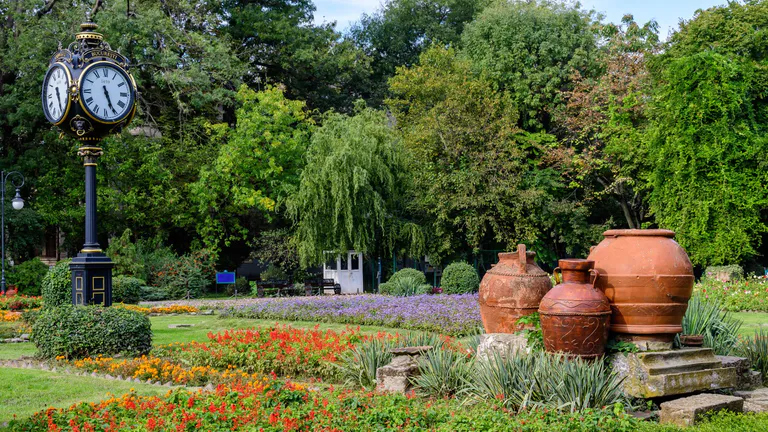
Bucharest is a proud and interesting city. Here you’ll find monuments harking back to the past mixed with exciting new areas of development.
The vast Palace of Parliament was former dictator Nicolae Ceausescu’s obsession, and despite having some 3,000 rooms, it still wasn’t finished at his death. Book in advance for a guided tour of this Communist folly – it offers a unique perspective on the nation’s history.
More graceful highlights of the capital are the Athenaeum, where the Philharmonic Orchestra plays, the Museum of the Romanian Peasant and the pretty Cismigiu Gardens.
Of Creatures and Castles
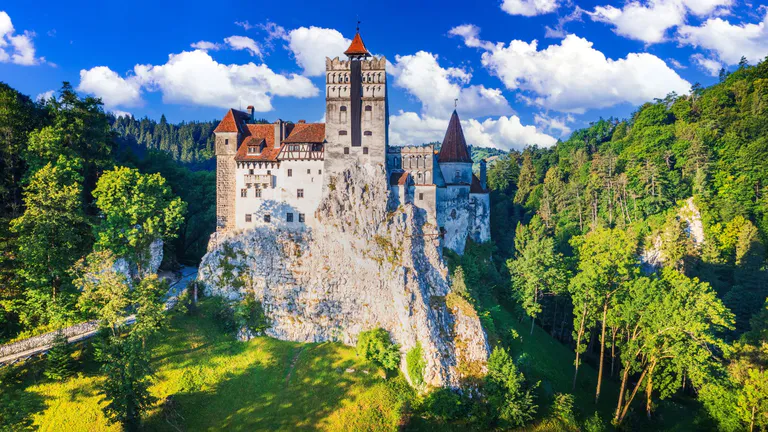
While the actual link between Bran Castle and Bram Stoker’s ‘Dracula’ is tenuous at best, the vampire myth and Transylvania are indelibly linked. The castles of the region are simultaneously stunning, romantic and a little spooky – best experienced when shrouded in fog.
Give in to the myths if you must, or remain a sceptic, either way a tour of the castle – the kind of place where Dracula should live – is worth the trip alone. The looming towers, the collection of Queen Marie’s furniture – it’s a 15th century fortress full of creepy corners, secret passages, creaking noises and lavish decoration.
You’ll have to travel elsewhere in the country to find somewhere that Vlad the Impaler actually lived. Poenari Castle sits on a cliffside in the Carpathians and is reachable by a climb of nearly 1,500 steps.
Medieval Manners
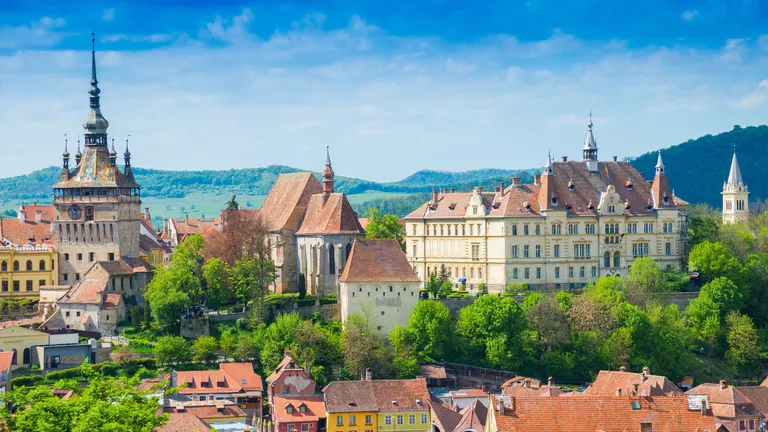
Much of Romania has an olde worlde feel, and the peasant culture dominates in regions like the lovely Maramures. It’s a place full of incredible medieval churches. Saint Parascheva in Poienile Izei is a 17th century wooden church that contains stunning frescoes.
Elsewhere in towns like Sighisoara, Sibiu and Brasov you’ll walk cobbled streets, idle at cafes and marvel at Gothic and baroque buildings and churches. The history is rich and complex here – at St Mary’s Evangelical Church in Sibiu, built in the 14th century – you’ll find the tomb of a Prince who once revelled in the name Mihnea the Evildoer.
Driving in Romania
One of the pleasures of driving in Romania is winding your way through the Carpathians, Europe’s largest mountain range. Breath-taking vistas, endless loops, plunging valleys and peaks of up to 8,000 feet are all waiting to explored.
Bucharest is in the south of the country, lying on the E81 road that runs from the Black Sea in the east, past the capital and on through the Carpathians to Sibiu. From Sibiu, the A1 goes west to Timisoara and on into Hungary. Cluj lies in the north-west, with the Apuseni Mountains and national park to the west, peppered with hundreds of caves.
Another key road is the E58, which links Baia Mare in the far north-west with Iasi on the eastern border near Moldova.
One of the first things you’ll notice about Romania is how few cars there are – especially compared to the US and most of Western Europe. Despite the size of the country, there are only 310 miles of highways. The majority of roads have two lanes and are very rural, and progress can sometimes be slow due to the number of carts on the road, especially in the stunning mountain passes. But, this all adds to the unique charm of Romania.
You’ll be driving on the right and overtaking on the left, and distances and speed limits are displayed in kilometers. On freeways the limit is 80mph (130kph), 62mph (100kph) on highways, 55mph (90kph) on roads outside of built-up areas and 30mph (50kph) in built-up areas. Seat belts are compulsory and children under the age of 12 cannot sit in the front passenger seat. Outside of built-up areas, dipped headlights must be used at all times of day.
You can find a handy guide to Romanian driving rules online.
Top Cities in Romania